Node.js and Next.js for Backend Development in 2022

Sofię_Nalimską
Project Manager
As we have promised, we continue to acquaint you with the best back-end development tools you should know about in 2022. In our previous article Top Backend Frameworks For Web Development In 2022: PHP Frameworks, the Powercode team analyzed and gave a detailed description of three PHP frameworks: Laravel, Symfony, and Yii 2.0. If you have skipped it, please, look at it right now. Do not break the sequence! We guarantee you an exciting read.
So, today we will dwell on two other popular backend tools for web development, Node.js and Next.js. In 2022, Node.js is ahead of React.js, becoming developers’ most used open-source server environment worldwide. Combining tools required for React and extra configurations and features for optimizing and improving applications, Next.js has rightfully earned the trust in the development process. So, let’s look at Next.js and Node.js trends in more detail.
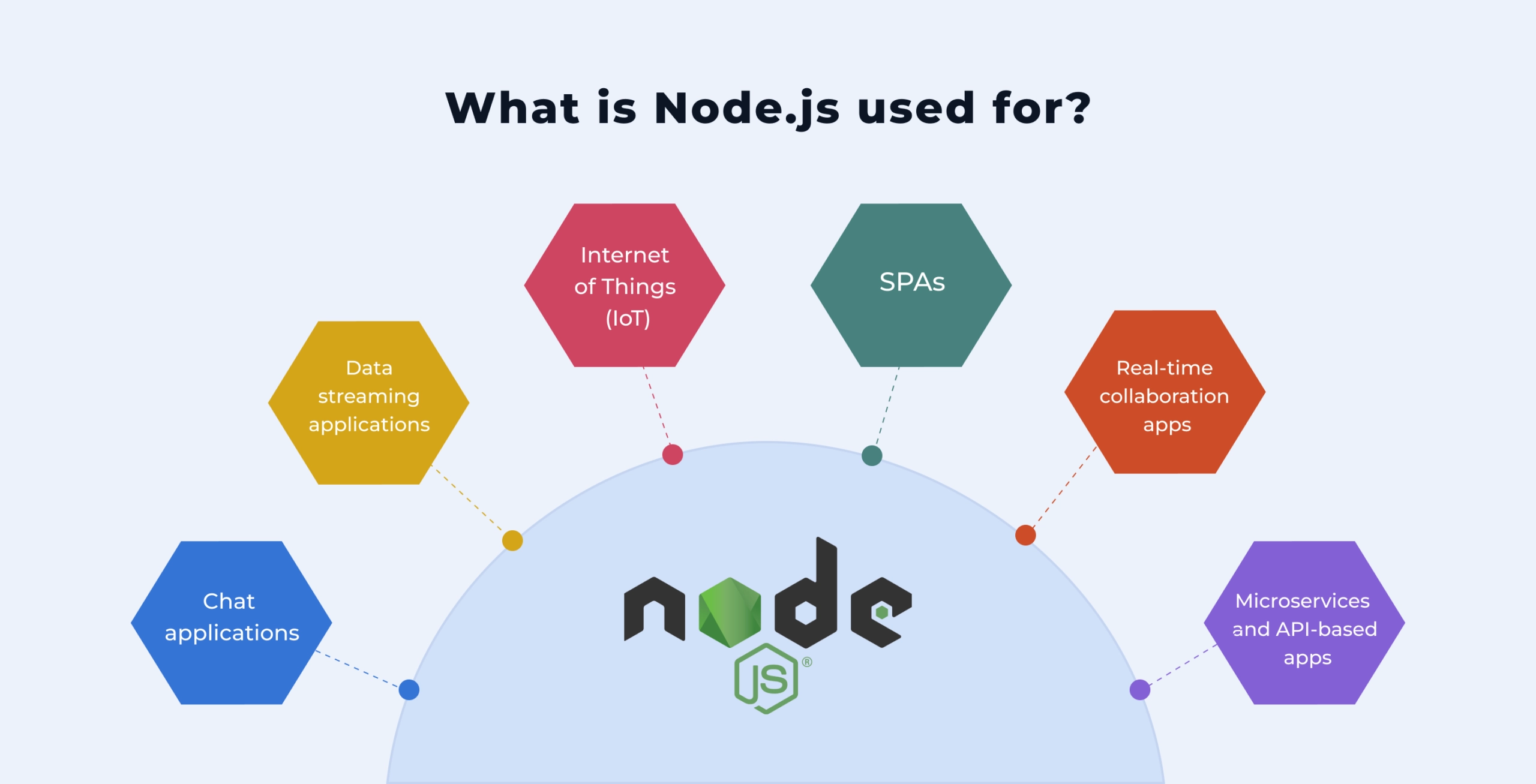 Chat applications. Real-time communication means live data transmission (video, audio, and text messages) from a sender to a recipient without delays and interruptions. Powerful functionalities of Node.js, such as Event API and the Socket.IO library, turn it into an exceptionally appropriate and efficient tool for building real-time chat applications. They enable developers to simplify the implementation of push notifications and server-side events based on the creation of special triggers periodically releasing named events managed by a certain event handler.
Data streaming applications. As we have already mentioned, Node.js is exceptionally lightweight and quick, which makes it easier to manage data streaming. Another crucial feature for developing efficient data streaming apps is a native Stream API, allowing one to conduct requests and stream data directly to the endpoint.
Internet of Things (IoT). The Internet of Things is plenty of physical objects connected to the Internet and exchanging data enabling people to enhance various areas of life. Node.js is designed to handle several concurrent requests and events sent by a great number of connected devices without speed and performance losses.
SPAs. Single-page applications are apps that operate inside a browser without the necessity to reload the page while using it. They are frequently used to develop social networking products and online drawing or texting tools. The event loop in Node.js handles requests in a non-blocking manner enabling it to process several background requests simultaneously.
Real-time collaboration apps. Real-time collaboration applications enable people to work together simultaneously, even if they are physically located in different places. People have to do many things simultaneously, work on the same document, delete or add some data in the same document or perform other manipulations. The asynchronous nature of Node.js perfectly suits responding to these demands. All participants in the process can see changes and updates; thus, they get a united view of the application.
Microservices and API-based apps. Microservices are an approach in which the system is built as a set of independent and loosely coupled services that communicate through APIs and can be created using various programming languages. Apps with microservice architecture make changes quickly without the necessity to rewrite the code significantly.
Chat applications. Real-time communication means live data transmission (video, audio, and text messages) from a sender to a recipient without delays and interruptions. Powerful functionalities of Node.js, such as Event API and the Socket.IO library, turn it into an exceptionally appropriate and efficient tool for building real-time chat applications. They enable developers to simplify the implementation of push notifications and server-side events based on the creation of special triggers periodically releasing named events managed by a certain event handler.
Data streaming applications. As we have already mentioned, Node.js is exceptionally lightweight and quick, which makes it easier to manage data streaming. Another crucial feature for developing efficient data streaming apps is a native Stream API, allowing one to conduct requests and stream data directly to the endpoint.
Internet of Things (IoT). The Internet of Things is plenty of physical objects connected to the Internet and exchanging data enabling people to enhance various areas of life. Node.js is designed to handle several concurrent requests and events sent by a great number of connected devices without speed and performance losses.
SPAs. Single-page applications are apps that operate inside a browser without the necessity to reload the page while using it. They are frequently used to develop social networking products and online drawing or texting tools. The event loop in Node.js handles requests in a non-blocking manner enabling it to process several background requests simultaneously.
Real-time collaboration apps. Real-time collaboration applications enable people to work together simultaneously, even if they are physically located in different places. People have to do many things simultaneously, work on the same document, delete or add some data in the same document or perform other manipulations. The asynchronous nature of Node.js perfectly suits responding to these demands. All participants in the process can see changes and updates; thus, they get a united view of the application.
Microservices and API-based apps. Microservices are an approach in which the system is built as a set of independent and loosely coupled services that communicate through APIs and can be created using various programming languages. Apps with microservice architecture make changes quickly without the necessity to rewrite the code significantly.
 Many famous companies have preferred NodeJS as the basis for their platforms. Let’s look at some of them more precisely.
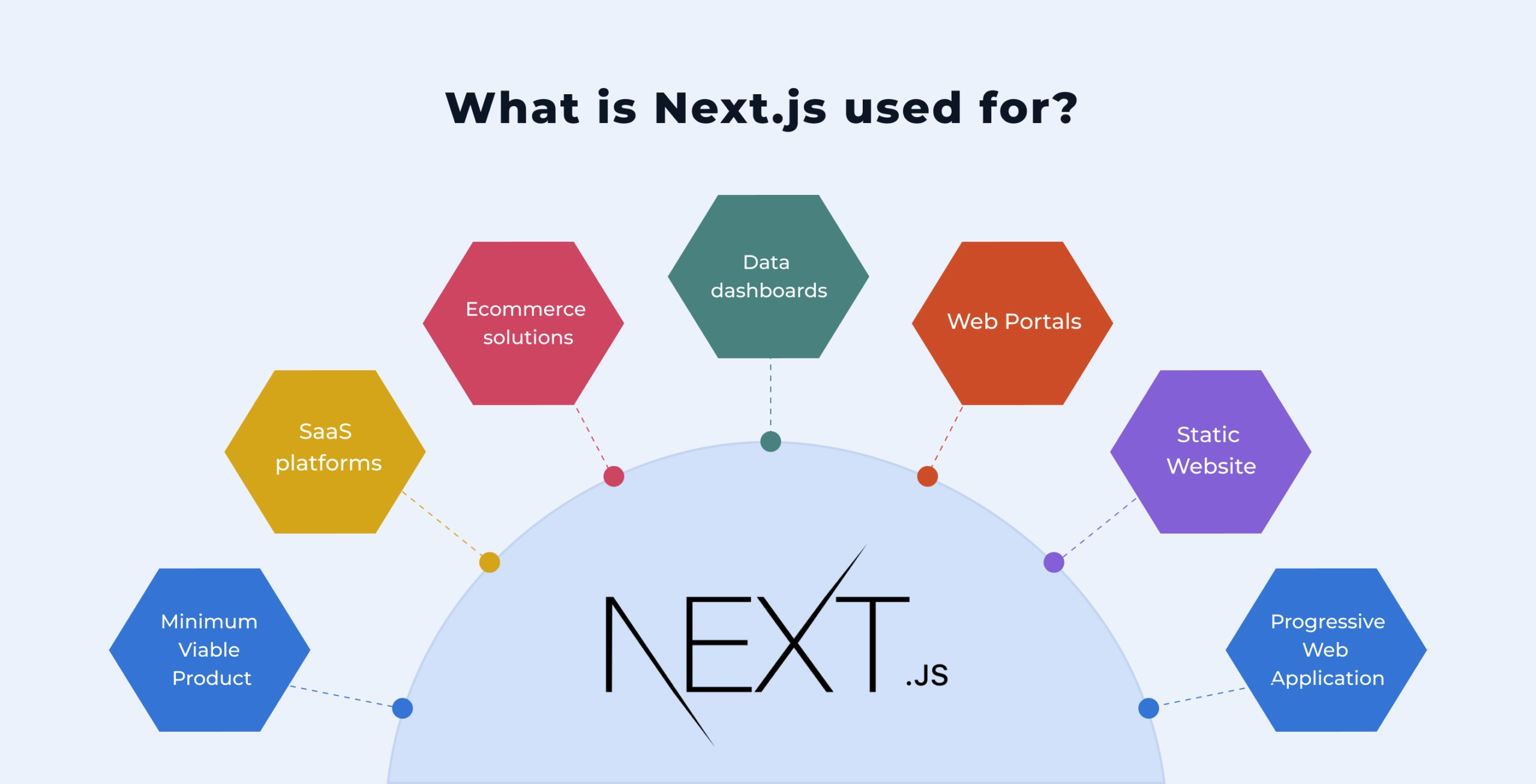 Next JS is used for developing various digital solutions, the main of which include:
Minimum Viable Product (MVP). MVP is the primary digital solution with core functionalities that would be enough to satisfy some minimal but sufficient user demand. Its main goal is to reduce the time needed for idea testing before developing the complete product. MVPs are adaptable to upgrades and changes due to their small set of features.
SaaS platforms. SaaS (software as a service) is a cloud solution that can be used online without pre-installation on a computer or any other device, allowing all participants to access it. Due to their configuration simplicity, the chance to use it by the whole team, and the high implementation speed, SaaS platforms have gained popularity.
Ecommerce solutions. E-commerce websites are specifically designed to enable users to conduct online transactions on selling and buying various goods and services. They help handle and monitor orders, accept payments, manage shipping, and deliver client service.
Data dashboards. They are a graphical user interface for demonstrating visual data on the efficiency of specific business processes or tasks, which can be presented in various forms, including infographics, tables, graphs, etc. The dashboard is easily changed in real time, modifying and adding analyzed data.
Web Portals. A web portal is a specially built website gathering and reflecting information in a variety of ways according to the user’s preferences. It contains comprehensive information covering many diverse topics. The main task of web portals is to simplify users’ lives and to collect in one place all the necessary information that they are searching for on various resources. Therefore, they have a branched structure with many elements, such as a search engine, news blocks, links to third-party resources, and many others.
Static Website. A static website comprises a set number of pre-built files, which are gathered and stored on a web server. Its files are written in “client-side” languages such as CSS, HTML, and JS. All users see it the same without any difference if only a developer hasn’t modified the source file.
Progressive Web Application (PWA). PWA is a web-development technology allowing a website’s visual and functional transformation into a native app. Though PWA sites are built in HTML, CSS, or JavaScript and look like a website, they interact with users as mobile applications. In addition, they have extended features allowing sites to work autonomously, send push notifications, etc.
Next JS is used for developing various digital solutions, the main of which include:
Minimum Viable Product (MVP). MVP is the primary digital solution with core functionalities that would be enough to satisfy some minimal but sufficient user demand. Its main goal is to reduce the time needed for idea testing before developing the complete product. MVPs are adaptable to upgrades and changes due to their small set of features.
SaaS platforms. SaaS (software as a service) is a cloud solution that can be used online without pre-installation on a computer or any other device, allowing all participants to access it. Due to their configuration simplicity, the chance to use it by the whole team, and the high implementation speed, SaaS platforms have gained popularity.
Ecommerce solutions. E-commerce websites are specifically designed to enable users to conduct online transactions on selling and buying various goods and services. They help handle and monitor orders, accept payments, manage shipping, and deliver client service.
Data dashboards. They are a graphical user interface for demonstrating visual data on the efficiency of specific business processes or tasks, which can be presented in various forms, including infographics, tables, graphs, etc. The dashboard is easily changed in real time, modifying and adding analyzed data.
Web Portals. A web portal is a specially built website gathering and reflecting information in a variety of ways according to the user’s preferences. It contains comprehensive information covering many diverse topics. The main task of web portals is to simplify users’ lives and to collect in one place all the necessary information that they are searching for on various resources. Therefore, they have a branched structure with many elements, such as a search engine, news blocks, links to third-party resources, and many others.
Static Website. A static website comprises a set number of pre-built files, which are gathered and stored on a web server. Its files are written in “client-side” languages such as CSS, HTML, and JS. All users see it the same without any difference if only a developer hasn’t modified the source file.
Progressive Web Application (PWA). PWA is a web-development technology allowing a website’s visual and functional transformation into a native app. Though PWA sites are built in HTML, CSS, or JavaScript and look like a website, they interact with users as mobile applications. In addition, they have extended features allowing sites to work autonomously, send push notifications, etc.
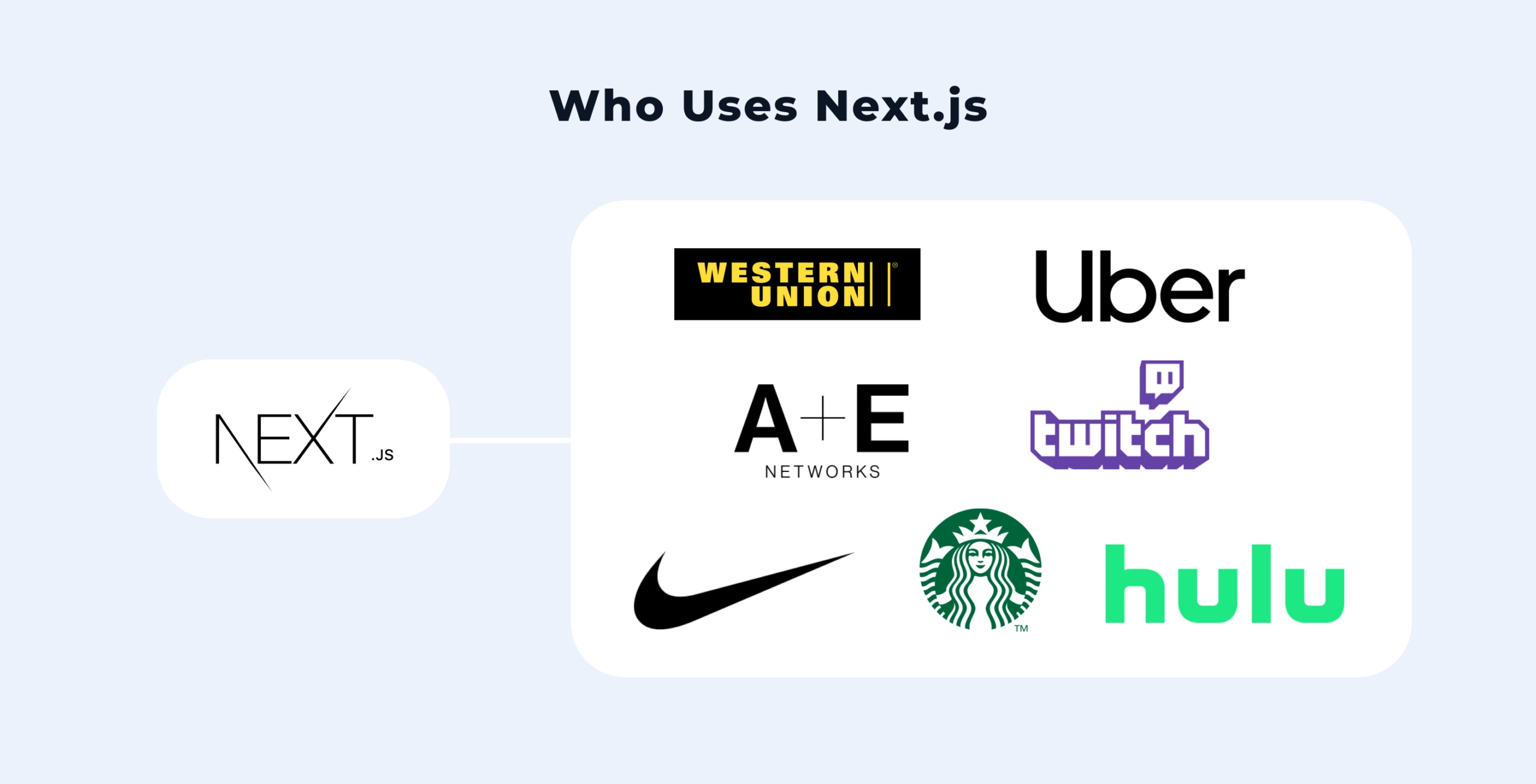 More than 1000 global companies use Next.js, this framework for server-rendered universal JavaScript apps, in their tech stacks.
Western Union. The Western Union Company is an American multinational financial services company uniting more than 200 countries with over 500,000 locations worldwide and providing various types of money transfers. They preferred Next.js while developing their website.
Twitch. It is a large multi-user social website for gamers. This live-streaming platform aims to demonstrate how people play games in a fun and friendly way. It also allows broadcasting streams, leaving running commentary, chatting, and enjoying other fun entertainment activities.
Hulu. Hulu is an entertainment platform like Netflix designed to provide viewers with unceasing pleasure, live sports, shows, and movies online. It is an excellent example of Next.js usage for developing SPA.
Uber. Uber is an American international public company located in San Francisco. It developed a unique mobile app with the same title for finding, calling, paying for taxis or private drivers, and food delivery. The Uber app allows users to track the movement of a car with a driver to the final point.
Starbucks. An American multinational coffeehouse chain founded in 1971 has a solid and convenient website. Its developers decided to benefit from the diversity of Next.js built-in features to create an advanced and customizable eCommerce platform with high performance.
Nike. Nike, Inc., an American multinational corporation, specializes in designing, developing, producing, and selling athletic footwear, accessories, sports equipment, and services around the world. Based on the combination of SSR (for the platform base) and CSG (for the constant updating), Nike’s upscale eCommerce website with appealing UI employs Next.js to meet its requirements.
A+E Networks. It is a worldwide media and entertainment company specializing in creating, developing, and illustrating captivating content for various ages. It operates more than 70 channel feeds in around 196 areas and 40 languages, reaching more than 400 mln domestic and foreign households.
More than 1000 global companies use Next.js, this framework for server-rendered universal JavaScript apps, in their tech stacks.
Western Union. The Western Union Company is an American multinational financial services company uniting more than 200 countries with over 500,000 locations worldwide and providing various types of money transfers. They preferred Next.js while developing their website.
Twitch. It is a large multi-user social website for gamers. This live-streaming platform aims to demonstrate how people play games in a fun and friendly way. It also allows broadcasting streams, leaving running commentary, chatting, and enjoying other fun entertainment activities.
Hulu. Hulu is an entertainment platform like Netflix designed to provide viewers with unceasing pleasure, live sports, shows, and movies online. It is an excellent example of Next.js usage for developing SPA.
Uber. Uber is an American international public company located in San Francisco. It developed a unique mobile app with the same title for finding, calling, paying for taxis or private drivers, and food delivery. The Uber app allows users to track the movement of a car with a driver to the final point.
Starbucks. An American multinational coffeehouse chain founded in 1971 has a solid and convenient website. Its developers decided to benefit from the diversity of Next.js built-in features to create an advanced and customizable eCommerce platform with high performance.
Nike. Nike, Inc., an American multinational corporation, specializes in designing, developing, producing, and selling athletic footwear, accessories, sports equipment, and services around the world. Based on the combination of SSR (for the platform base) and CSG (for the constant updating), Nike’s upscale eCommerce website with appealing UI employs Next.js to meet its requirements.
A+E Networks. It is a worldwide media and entertainment company specializing in creating, developing, and illustrating captivating content for various ages. It operates more than 70 channel feeds in around 196 areas and 40 languages, reaching more than 400 mln domestic and foreign households.
Node.js
General Facts
Node.js is an open-source, cross-platform, asynchronous event-driven JavaScript runtime environment built on the Chrome V8 engine. It is designed to write server code for dynamic web pages and applications, carry out manipulations with files on the server, and handle various data in databases. Due to lightweight JavaScript, it is high-performing with a comprehensive system of packages and Node modules regarded as NodeJS fundamentals. Node.js developers have the possibility to package their libraries and solutions into a module that can be easily installed via NPM. Vast online community assistance, means for building cross-platform applications, acting as a proxy server for the company, and high extensibility and scalability are some features that make it stand out from its opponents.Target Projects and Confidence Level
The capacity to execute JavaScript on the client and server sides has made Node.js handy for creating applications that employ this feature. In general, it is a platform primarily focused on web development and providing services that require stable and continuous data exchange with users.
Chat applications. Real-time communication means live data transmission (video, audio, and text messages) from a sender to a recipient without delays and interruptions. Powerful functionalities of Node.js, such as Event API and the Socket.IO library, turn it into an exceptionally appropriate and efficient tool for building real-time chat applications. They enable developers to simplify the implementation of push notifications and server-side events based on the creation of special triggers periodically releasing named events managed by a certain event handler.
Data streaming applications. As we have already mentioned, Node.js is exceptionally lightweight and quick, which makes it easier to manage data streaming. Another crucial feature for developing efficient data streaming apps is a native Stream API, allowing one to conduct requests and stream data directly to the endpoint.
Internet of Things (IoT). The Internet of Things is plenty of physical objects connected to the Internet and exchanging data enabling people to enhance various areas of life. Node.js is designed to handle several concurrent requests and events sent by a great number of connected devices without speed and performance losses.
SPAs. Single-page applications are apps that operate inside a browser without the necessity to reload the page while using it. They are frequently used to develop social networking products and online drawing or texting tools. The event loop in Node.js handles requests in a non-blocking manner enabling it to process several background requests simultaneously.
Real-time collaboration apps. Real-time collaboration applications enable people to work together simultaneously, even if they are physically located in different places. People have to do many things simultaneously, work on the same document, delete or add some data in the same document or perform other manipulations. The asynchronous nature of Node.js perfectly suits responding to these demands. All participants in the process can see changes and updates; thus, they get a united view of the application.
Microservices and API-based apps. Microservices are an approach in which the system is built as a set of independent and loosely coupled services that communicate through APIs and can be created using various programming languages. Apps with microservice architecture make changes quickly without the necessity to rewrite the code significantly.
Many famous companies have preferred NodeJS as the basis for their platforms. Let’s look at some of them more precisely.
- Netflix. An American subscription streaming service and production company with more than 220 million subscribers moved to NodeJS to enhance its performance.
- PayPal. The electronic commerce company facilitating payments between parties through online transfers chose NodeJS to reduce code size, deployment, and loading time.
- LinkedIn. The world’s largest professional network used NodeJS to move from synchronous to asynchronous request processing, handle the client-server interaction faster and easier, and make code more modular.
- Walmart. The leading American supermarket giant employed NodeJS to create an HTML-friendly website for search engines and to increase its performance.
- eBay. The global online auction and trading company wanted to simplify delivering its specific microservices, make the application real-time as far as it was possible, and serve its data on different platforms. It was the main reason why eBay chose NodeJS to meet these demands.
- Trello. The well-known project management tool needed a lightweight server with high loading speeds and technology to process simultaneous requests. Thus, its choice fell on NodeJS.
Strengths and Weaknesses of Node.js
Benefits of Node.js
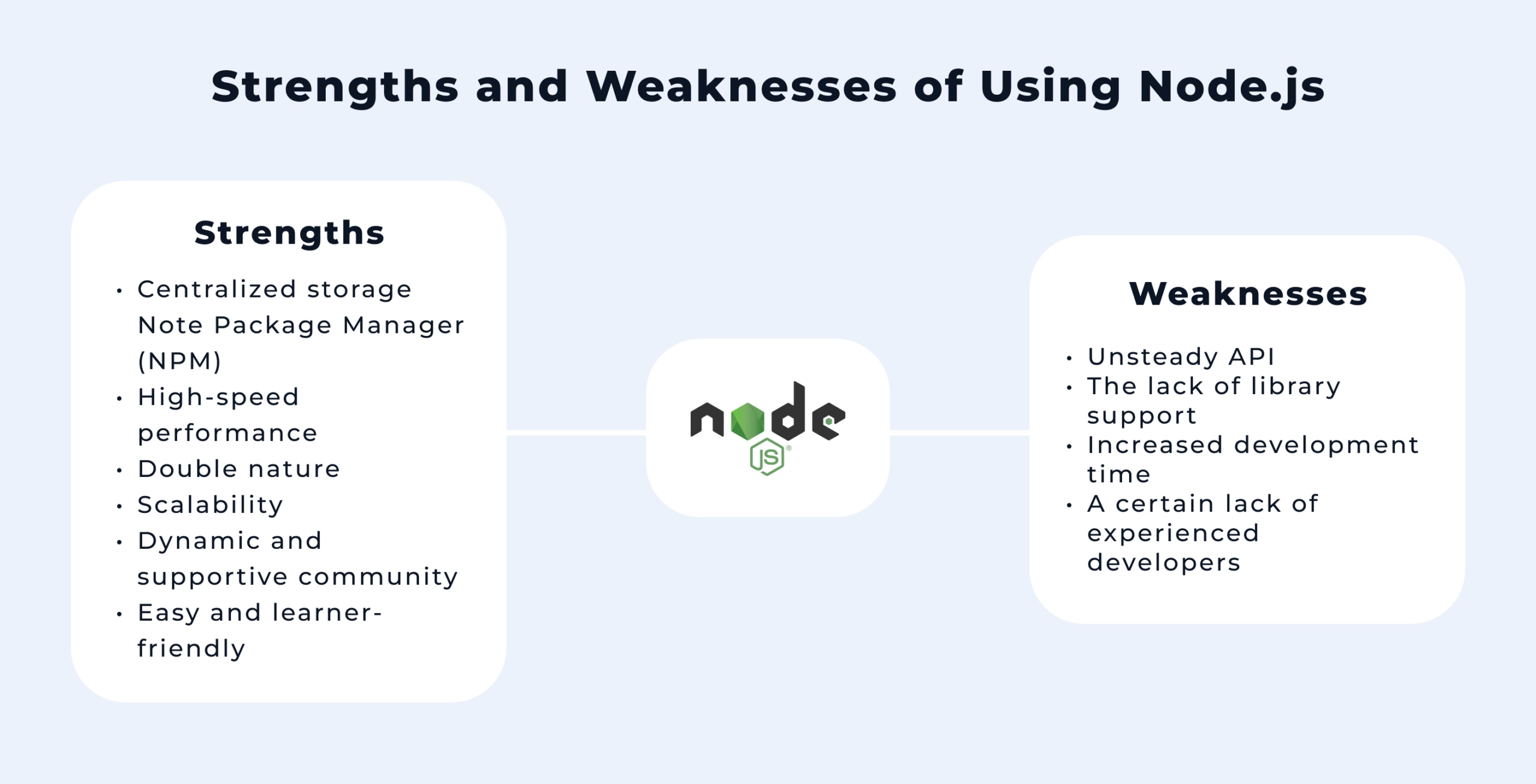
| High-speed performance | Due to the non-blocking thread execution, Node.js allows developers to read files, send emails, make changes, and perform other operations concurrently. There is no need to wait while the previous task is completed. |
| Centralized storage NPM | The module manager significantly helps avoid writing the same components; thus, it saves developing time for ready-made applications at times. |
| Double nature | The option to use Node.js both on the client side of the application (frontend) and on the server side (backend) sets it apart from competitors . A developer does not need to change the programming context during the development process, which means it is easier to learn and work with. |
| Scalability | Node.js projects support horizontal and vertical scaling. The balance in loading and its ability to manage various concurrent tasks allow Node.js to scale easily and effortlessly. Besides, developers can build an independent microservice for different functionalities and scale it independently without impacting other components. |
| Dynamic and supportive community | Though the Node.js community is relatively young, its members actively participate in its life. Active and vigorous Node.js developers keep posting, uploading, and placing numerous ready-made solutions and codes in Github, answering urgent questions and searching for optimal solutions together. |
| Easy and learner-friendly | Using syntax and well-known JavaScript features makes it much easier to get familiar with Node.js and start implementing it at the back-end. A developer does not need to spend days studying tons of literature and documents. |
Weaknesses of Node.js
| Unsteady API | Developers regard this issue as one of the most crucial because there have been many changes to the Node.js API so far and not all of them are backward compatible. To maintain compatibility with the latest version of the Node.js API, they have to make changes to the available codebase every time a new version is released. |
| The lack of library support | Node.js lacks some libraries, so that we can speak about a not sufficiently equipped and robust library system in general. It hampers the fulfillment of simple programming tasks, e.g., XML parsing or database operations. |
| Increased development time | Being single-threaded and event-driven, Node.js needs more time to complete heavy CPU-based calculations. It causes delays in processing and event loop. Also, a large amount of queued tasks in the background can result in the Pyramid of Doom or callback hell, which directly affects the code performance. |
| A certain lack of experienced developers | We should not confuse JS development with Node.js development. Technically, they are different, and a person must have profound knowledge of the javascript backend to master Node.js. However, the demand for Node.js is permanently growing, and specialists need time to learn it, so demand outstrips supply. Thus, companies have to compete for talented and experienced Node.js developers. |
Next.js
General Facts
Next.js is a React-based, open-source framework created by Vercel in 2016. It enables hybrid static and server-side rendering for building fast web applications with all features required for the customer. SSR support distinguishes it from other frameworks generating improved performance and SEO optimization. The Next.js framework combines great built-in tools for quickly launching a web application and the possibility to modify configuration under your requirements to get the most productivity.Target Projects and Confidence Level
Next JS is used for developing various digital solutions, the main of which include:
Minimum Viable Product (MVP). MVP is the primary digital solution with core functionalities that would be enough to satisfy some minimal but sufficient user demand. Its main goal is to reduce the time needed for idea testing before developing the complete product. MVPs are adaptable to upgrades and changes due to their small set of features.
SaaS platforms. SaaS (software as a service) is a cloud solution that can be used online without pre-installation on a computer or any other device, allowing all participants to access it. Due to their configuration simplicity, the chance to use it by the whole team, and the high implementation speed, SaaS platforms have gained popularity.
Ecommerce solutions. E-commerce websites are specifically designed to enable users to conduct online transactions on selling and buying various goods and services. They help handle and monitor orders, accept payments, manage shipping, and deliver client service.
Data dashboards. They are a graphical user interface for demonstrating visual data on the efficiency of specific business processes or tasks, which can be presented in various forms, including infographics, tables, graphs, etc. The dashboard is easily changed in real time, modifying and adding analyzed data.
Web Portals. A web portal is a specially built website gathering and reflecting information in a variety of ways according to the user’s preferences. It contains comprehensive information covering many diverse topics. The main task of web portals is to simplify users’ lives and to collect in one place all the necessary information that they are searching for on various resources. Therefore, they have a branched structure with many elements, such as a search engine, news blocks, links to third-party resources, and many others.
Static Website. A static website comprises a set number of pre-built files, which are gathered and stored on a web server. Its files are written in “client-side” languages such as CSS, HTML, and JS. All users see it the same without any difference if only a developer hasn’t modified the source file.
Progressive Web Application (PWA). PWA is a web-development technology allowing a website’s visual and functional transformation into a native app. Though PWA sites are built in HTML, CSS, or JavaScript and look like a website, they interact with users as mobile applications. In addition, they have extended features allowing sites to work autonomously, send push notifications, etc.
More than 1000 global companies use Next.js, this framework for server-rendered universal JavaScript apps, in their tech stacks.
Western Union. The Western Union Company is an American multinational financial services company uniting more than 200 countries with over 500,000 locations worldwide and providing various types of money transfers. They preferred Next.js while developing their website.
Twitch. It is a large multi-user social website for gamers. This live-streaming platform aims to demonstrate how people play games in a fun and friendly way. It also allows broadcasting streams, leaving running commentary, chatting, and enjoying other fun entertainment activities.
Hulu. Hulu is an entertainment platform like Netflix designed to provide viewers with unceasing pleasure, live sports, shows, and movies online. It is an excellent example of Next.js usage for developing SPA.
Uber. Uber is an American international public company located in San Francisco. It developed a unique mobile app with the same title for finding, calling, paying for taxis or private drivers, and food delivery. The Uber app allows users to track the movement of a car with a driver to the final point.
Starbucks. An American multinational coffeehouse chain founded in 1971 has a solid and convenient website. Its developers decided to benefit from the diversity of Next.js built-in features to create an advanced and customizable eCommerce platform with high performance.
Nike. Nike, Inc., an American multinational corporation, specializes in designing, developing, producing, and selling athletic footwear, accessories, sports equipment, and services around the world. Based on the combination of SSR (for the platform base) and CSG (for the constant updating), Nike’s upscale eCommerce website with appealing UI employs Next.js to meet its requirements.
A+E Networks. It is a worldwide media and entertainment company specializing in creating, developing, and illustrating captivating content for various ages. It operates more than 70 channel feeds in around 196 areas and 40 languages, reaching more than 400 mln domestic and foreign households.
Strengths and Weaknesses of the Next.js Framework
To understand the strong and weak sides of the Next.js framework, we have gathered all its advantages and disadvantages and now share them with you.
Benefits of Using NextJS
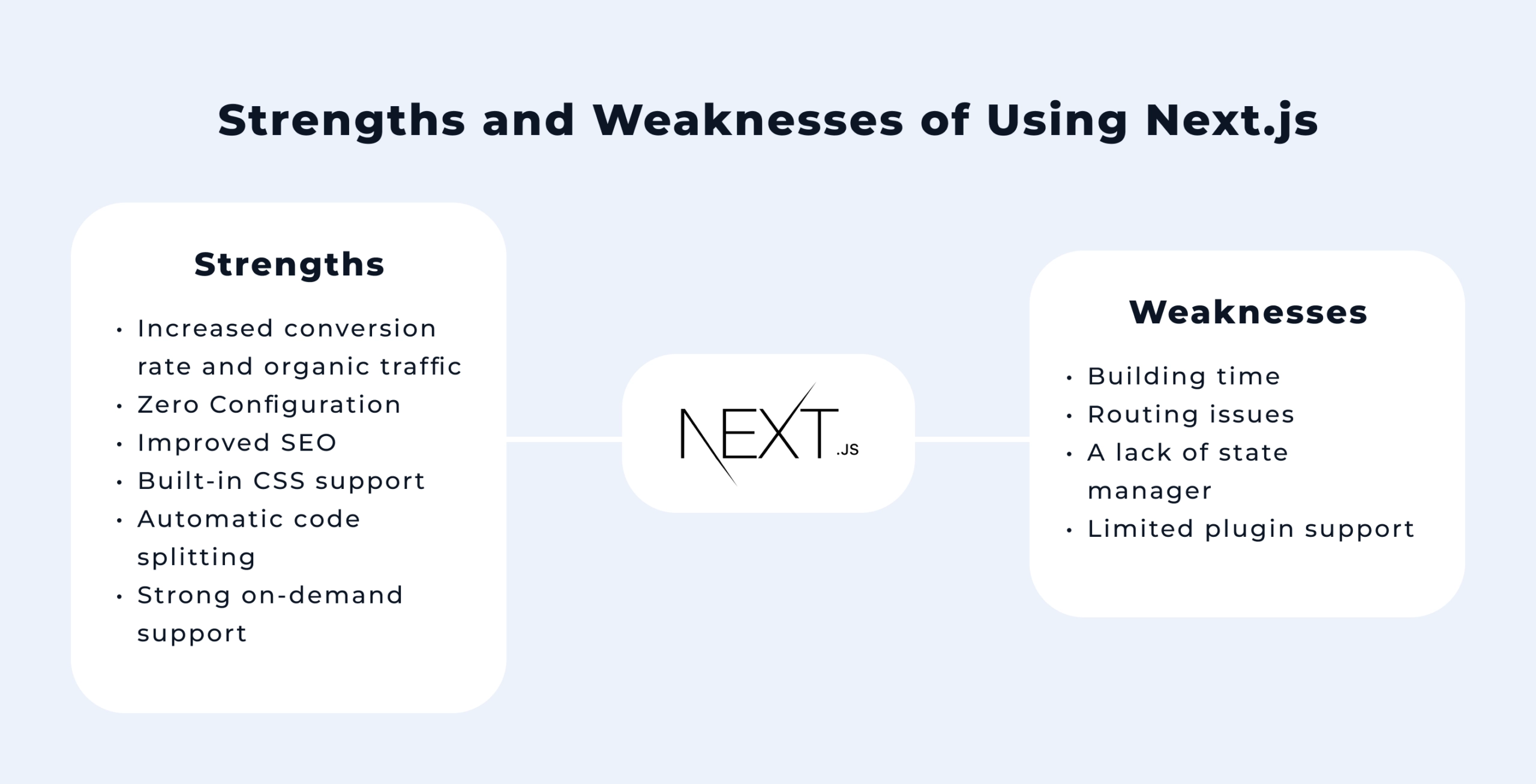
| Increased conversion rate and organic traffic | Next.js provides an increased speed of page load, robust user experience, and high accessibility. These three components are essential for improving conversion and increasing its rate, as well as they assure the promotion of website rank in search engines. |
| Zero Configuration | Next JS applications allow developers to concentrate more on the business logic than the app logic via automatic bundling and compilation features, originally streamlined for building. In addition, this framework provides full support for Windows, Linux, and macOS. |
| Improved SEO | Server Side Rendering allows access to all data required for page building on the server, changing it, and sending it immediately back to a browser, resulting in a faster loading speed of a page and improved responsiveness. These two factors are crucial for SEO ranking. The website built in Next.js will smoothly increase organic traffic and keywords ranking, making the site more visible to potential clients. |
| Built-in CSS | Next JS broadens the import method and goes beyond JavaScript, giving a developer the possibility to import CSS files directly from a JS file. It guarantees faster rendering. |
| Automatic code splitting | Next.js provides code splitting for each page, thus allowing developers to increase the number of pages without changing the bundle size. |
| Strong on-demand support | Because of the high demand for Next.js, the number of developers is constantly growing. They unite in communities where members share information, post ready-made solutions, and help solve problems during development. For example, the Next.js Discord community is created for Next.js developers to simplify building and spreading solutions by reducing entry barriers. |
Weaknesses of The NextJS Framework
| Building time | Building the whole website with Next.js happens in a static way, which means if the final product has a large number of pages, then the build time can increase significantly, requiring more time to complete the work. |
| Routing issues | A developer cannot modify the approach to Next.js operation with routes because it is strictly limited to employing just a file-based router. Thus, if a project needs some dynamic routes, it is necessary to switch to Node.js. |
| A lack of state manager | State management handles such issues as deciding what data and how to display during users’ interaction with the app or how to process the state of UI control systems. Due to a lack of a built-in state manager, developers must use third-party tools to meet all demands for UI. |
| Limited plugin support | Let’s compare the Next.js framework with other similar structures. We can find that the number of easily adaptable plugins is far fewer, and developers will need more time and effort for the development process. |