AI for Fintech: A Beginner’s Guide to Building Intelligent SaaS in 2026
Building a fintech SaaS platform in 2026 requires more than just a clean interface and a reliable database. The competitive baseline is now defined by how effectively you integrate artificial intelligence into the core user experience. Whether you are automating complex regulatory workflows or providing personalized financial advisory agents, AI is no longer a luxury—it is the engine of modern financial software.

Understanding the New Fintech Paradigm
In 2026, “fintech” is synonymous with “intelligence.” Users expect their banking or investment tools to predict their needs, flag fraud before it occurs, and handle reconciliation tasks autonomously. For beginners starting a SaaS journey, the goal isn’t to build a foundational Large Language Model from scratch. Instead, it is about orchestration: combining specialized financial APIs with pre-trained AI models to deliver high-value, niche services that traditional banking apps fail to provide.
Data Governance and Regulatory Compliance
You cannot discuss artificial intelligence in fintech without addressing the compliance elephant in the room. By 2026, global financial regulations require radical transparency in AI decision-making. If your model denies a loan application or flags a transaction, it must provide an explainable audit trail. When architecting your SaaS, ensure your data pipeline treats “Explainable AI” (XAI) as a core feature. Use sandboxed environments that keep sensitive PII (Personally Identifiable Information) separate from the reasoning layers of your AI agents.

Selecting the Right AI Stack for Financial SaaS
The modern stack for AI-enabled fintech is increasingly modular. Many developers now leverage “Financial-Specific LLMs” that have been fine-tuned on SEC filings, legal documentation, and historical market data. When building your MVP, look for cloud-native AI services that offer high-throughput inference with built-in SOC2 compliance. Using managed vector databases is essential for providing your AI with “long-term memory” regarding a user’s transaction history or financial goals.
Automating Back-Office Workflows
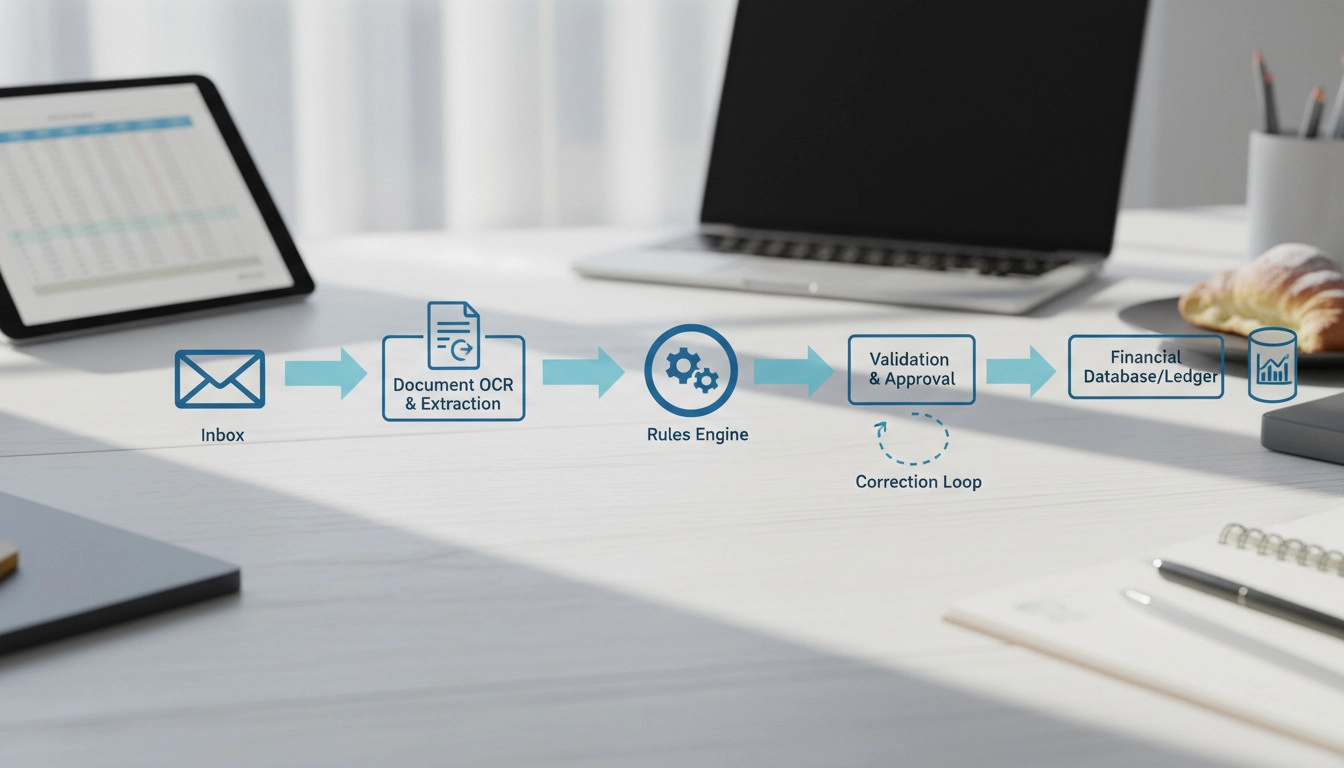
The most profitable application of AI for beginners today is often found in the “boring” parts of finance. Document ingestion—such as processing multi-page tax forms or reconciling complex invoices—is a goldmine for SaaS founders. Use multimodal AI to extract data from unstructured documents and map it directly into your accounting ledger. By removing manual data entry, you turn your SaaS into a “must-have” productivity tool rather than just a passive display app.
Enhancing Security and Fraud Detection
Traditional rule-based fraud detection systems are effectively obsolete in 2026. Modern fintech SaaS must employ behavioral biometrics powered by machine learning. This involves analyzing user patterns—such as the cadence of keystrokes or typical device interaction times—to verify identity. Building a “security-first” SaaS means embedding these AI agents at every touchpoint, from the authentication gate to the transaction confirmation screen.
Scaling Your AI-Driven Product
Once you move past the tutorial stage and into production, you will face the challenge of latency and cost. AI inference can be expensive at scale. To keep your fintech SaaS profitable, implement a tiered request strategy: use lightweight, specialized models for common queries and reserve high-compute, resource-heavy models for deep analytical tasks. Always provide a “human-in-the-loop” fallback, ensuring that if the AI reaches a low-confidence threshold, a human analyst is signaled to intervene.
The Future of Personalized Financial Literacy
The next frontier for fintech SaaS is hyper-personalization. Users no longer want generic budget tips; they want an AI assistant that understands their specific tax situation, debt ratios, and long-term investment horizon. As you build, focus on creating agents that act as proactive financial partners. In 2026, the brands that win will be those that turn complex financial data into actionable, easy-to-understand human guidance.