Software Product Engineers: Responsibilities and Team Fit
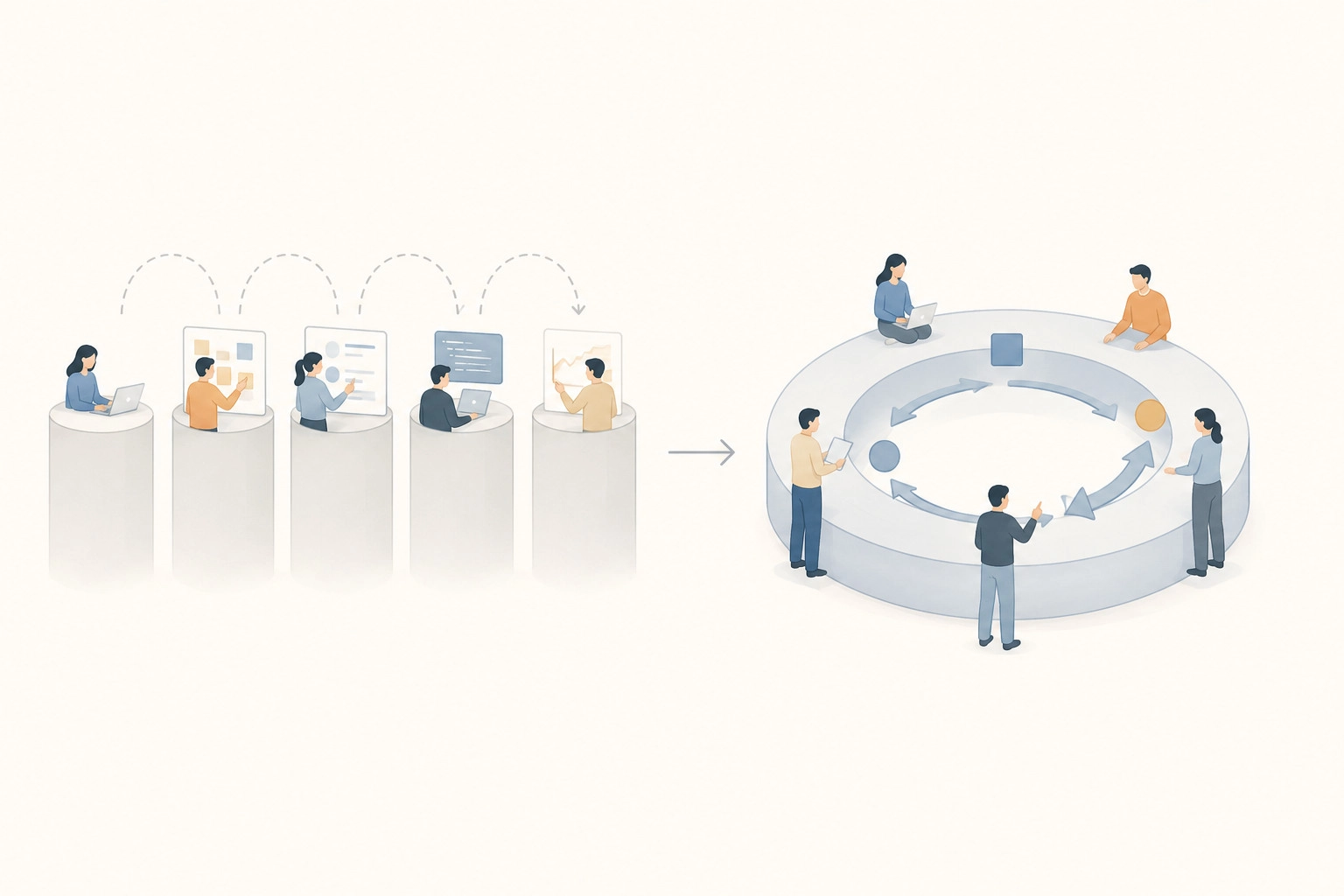
A software product engineer combines software delivery with an understanding of user needs and business outcomes. The role can help a team connect discovery, implementation and feedback. It does not make designers, product managers, security specialists or experienced backend engineers unnecessary.
The useful hiring question is which responsibility your team cannot currently fulfil. Define that gap before changing job titles or asking one person to cover an entire department.
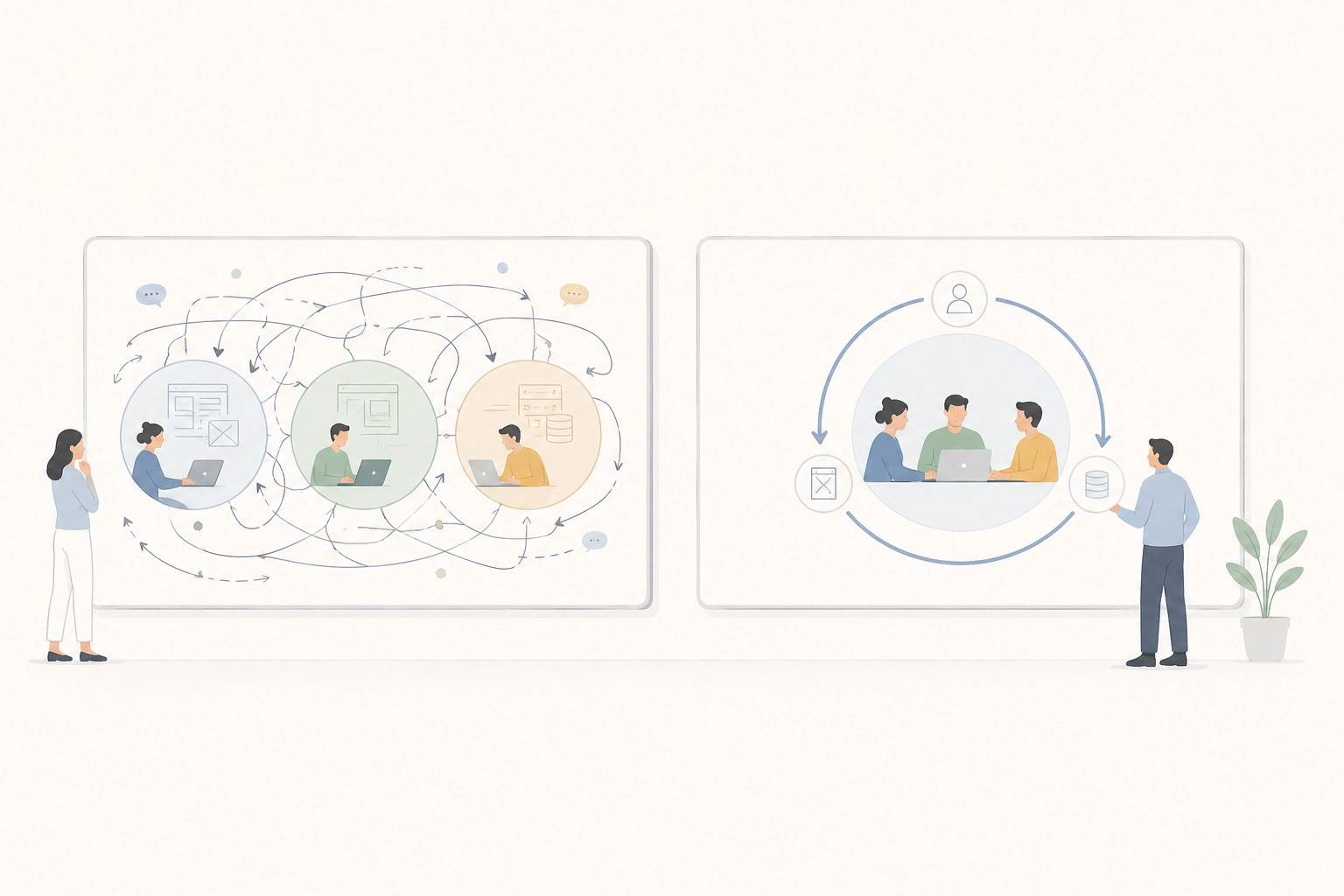
What a software product engineer owns
In a product-oriented role, an engineer helps clarify the problem, evaluates technical options, implements an appropriate change and checks what happened after release. The exact scope depends on seniority, domain risk and team support. End-to-end responsibility means following an outcome through delivery; it does not require personally completing every specialist task.
| Responsibility | Useful evidence |
|---|---|
| Problem understanding | Can explain the user problem and challenge an unsupported requirement |
| Implementation judgment | Can compare a small reversible change with a more expensive redesign |
| Software quality | Tests behavior, handles failure and seeks review where needed |
| Outcome ownership | Checks adoption and errors after release, then adjusts the solution |
Product engineer versus full-stack developer
Full-stack describes technical breadth across application layers. Product engineering describes a style of responsibility. One person can be both. A full-stack developer may already show excellent product judgment, while a person with “product engineer” in their title may still need support with discovery or delivery.
Avoid evaluating candidates from labels alone. Ask them to explain a delivered change, the trade-offs, how they checked quality and what they learned from users. Our guide to evaluating engineering evidence applies this principle to specialist hiring.
When specialist depth remains essential
Security-critical systems, complex data infrastructure, accessibility and performance constraints can require expertise beyond a generalist’s remit. Give the team a clear way to involve specialists and retain the necessary review authority. Do not make a product-oriented title an excuse to remove checks.
Team Topologies explicitly includes platform, enabling and complicated-subsystem teams alongside stream-aligned teams. That is a useful reminder that reducing handoffs does not mean eliminating specialist contributions.
Decide whether the role fits your team
- Good fit: a bounded product area, access to users or product evidence, a clear technical environment and colleagues who can review decisions.
- Needs support: the engineer is expected to own outcomes but cannot access users, release changes or see operating metrics.
- Wrong substitute: a vacancy primarily caused by a missing security, infrastructure or domain specialist.
If the problem is coordination across several teams, assess team boundaries and delivery ownership first. A new job title will not remove dependencies built into the system.
Use a practical work discussion
Give a candidate a fictional feature request with incomplete information. Ask what they would clarify, what small version they would ship, how they would test it and when they would involve another specialist. Assess the reasoning against a written scorecard, not confidence or presentation style.
If AI tools are allowed, state that before the exercise and ask the candidate to explain how they verified the output. Do not confuse polished generated code with demonstrated understanding. Avoid using real unpaid client work as an assessment.
Set the conditions for useful ownership
Assign a defined product area, a product counterpart and an explicit escalation route. Give the engineer access to the repository, relevant documentation and approved operating data. Agree what they can decide independently and which changes require review.
Track useful outcomes alongside delivery reliability. A shorter development cycle is not a win if incidents, rework or user confusion increase. DORA’s delivery metrics offer a starting point for reviewing software delivery, rather than ranking individual developers by code volume.
Frequently asked questions
Is a product engineer a replacement for a product manager?
No. Product leadership, prioritisation and customer research remain necessary. Responsibilities can overlap, but they should be agreed rather than silently transferred.
Does every team need this job title?
No. Existing engineers can work with product ownership without a title change. Use a title that accurately communicates the role in your organisation.
Should we hire a generalist or a specialist?
Hire for the missing capability. Broad ownership helps with cross-layer product work; specialist depth matters when a particular risk or technical constraint dominates.
Discuss the capability your team is missing
Powercode Group supports technical hiring and dedicated delivery teams. If your existing team already covers the role, process changes may be enough. Otherwise, describe the product responsibility you need someone to own, and we can discuss the right profile.