When Should You Hire a QA Engineer?
Hire a quality assurance (QA) engineer when important testing work repeatedly exceeds the time or skills your team can provide. Before opening the role, check what is delaying releases. Unclear requirements, unavailable test data and unreliable automated tests can create a testing queue that another person will struggle to clear.
For a small product team, ask which quality work is missing and who can own it. A team of five can need specialist help. A larger team can have a process problem rather than a staffing gap.
Follow one change from development to release
Choose a recent feature or bug fix that took longer than expected. Reconstruct its path using the issue history, deployment records and the people involved.
Record when it became ready for testing, when someone could start, how much testing took place and what happened before release. Include time spent waiting for clarification, test accounts, a working environment or a developer’s fix.
This separates two problems:
- Testing capacity: prepared work waits because nobody has time to investigate and test it.
- Delivery friction: testing is blocked, interrupted or repeated because something else is missing.
Google Cloud’s DORA software-delivery research recommends examining elapsed time and active work when mapping delivery. Its continuous-delivery guidance also places testing throughout development. These principles help diagnose a bottleneck; they do not prescribe how many QA engineers a team needs.
Keep the exercise small. Start with a few real changes and expand if the pattern remains unclear.
The release queue can point to the wrong problem
Imagine a SaaS team whose latest feature spent three days in “Ready for QA”. The team concludes that it needs another tester.
An illustrative review of the work finds:
- Four hours of active exploratory and regression testing.
- Five hours waiting for a usable test account.
- Three hours waiting for an answer about expected behaviour.
- Four hours waiting for a fix and another deploy.
Those 16 recorded hours do not explain the whole elapsed period. The team still needs to identify any other waits and account for its working schedule.
The feature needed testing. Yet another QA engineer would not automatically supply the account, decide how it should behave or produce the fix.
One example does not explain every release. Check whether the same blockers appear on other changes before committing to a role.
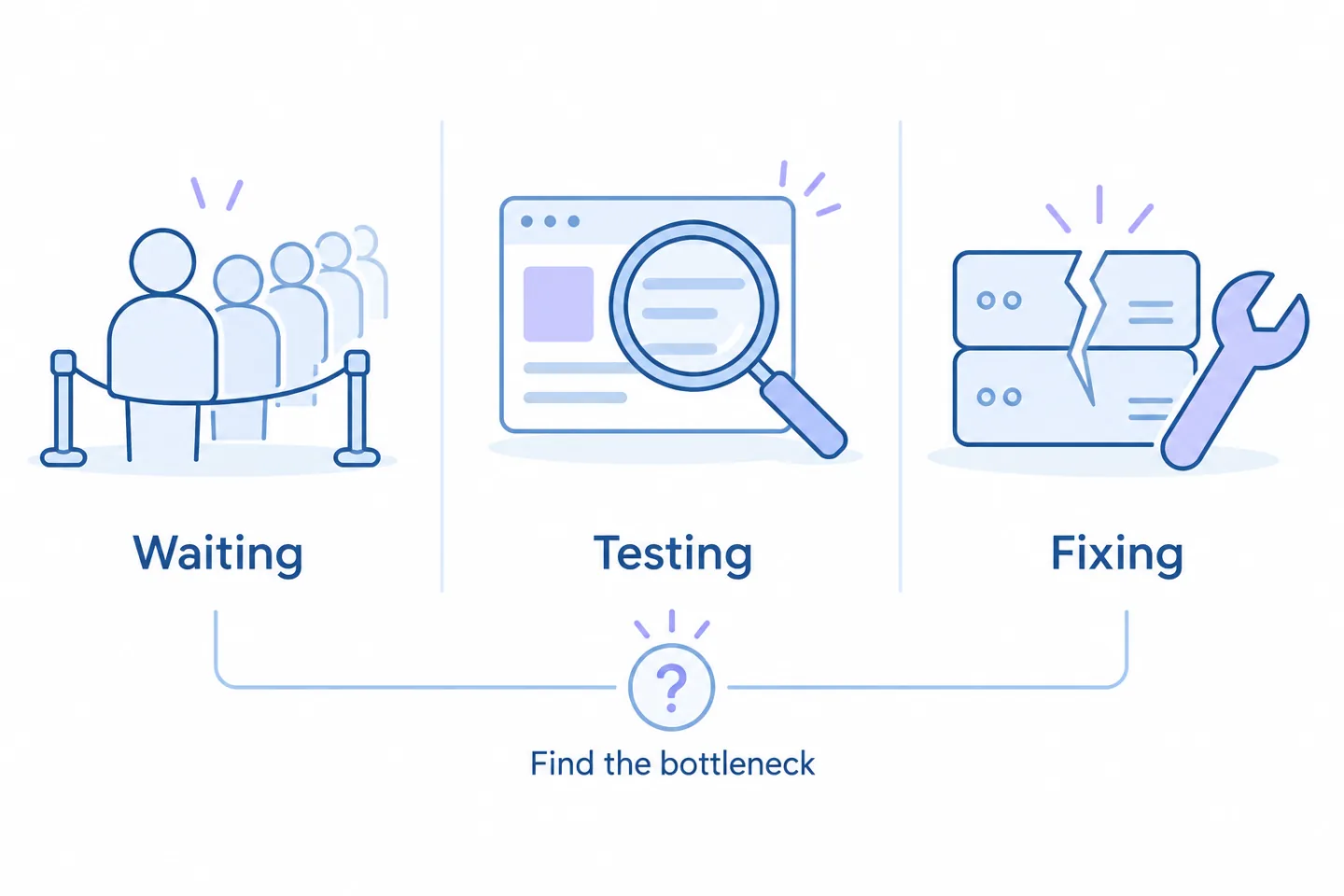
Three situations that support hiring QA
Prepared work regularly waits for testing
The requirements are clear, the environment works and the build is available, but testing still waits. Developers or the CTO cover it between other tasks, so checks become rushed or releases slip.
This is a capacity signal. Identify the recurring work and its approximate demand: exploring new features, checking integrations, investigating reported bugs or maintaining release evidence.
Assign product areas and risks, not just a list of clicks to repeat. A QA engineer needs context to make useful decisions.
Nobody owns the important product risks
Your developers test individual changes, yet nobody consistently checks the customer journey across them. A billing change may interact with permissions, cancellation and reporting. Each component can look reasonable while the full journey remains poorly understood.
A QA engineer can turn those risks into test priorities and release questions. The role is useful when that work is substantial and recurring.
Developers still own the quality of their changes; the product owner still decides expected behaviour. Our software team design guide explains how unclear responsibilities create delivery problems.
You need testing skills the team does not have
The gap may be specialist knowledge rather than hours. Your product may need performance testing, accessibility investigation or deeper test automation. Decide whether this is a continuing role or a bounded piece of work.
A permanent generalist hire is not automatically the best way to cover an occasional specialist need. Define the missing outcome first.
When a QA hire should wait
Pause the recruitment brief when most “testing” work consists of getting the product ready to test.
- Acceptance criteria change after testing starts.
- People give conflicting answers about expected behaviour.
- The test environment contains the wrong version or cannot be used.
- Tests repeatedly fail for reasons nobody has investigated.
- The same defects return because fixes do not address the cause.
- One unavailable decision-maker must approve every small question.
Give the blocker an owner. That may be a developer, product lead or infrastructure engineer. A QA specialist can help investigate, but a routine test-execution brief may attract the wrong profile.
Decide what changes first, how you will check the result and when you will revisit capacity. A diagnostic period should cover normal releases; its length should fit your release pattern.
“A testing queue tells you where work is waiting, but not always why. Before hiring, check whether the missing capacity is investigation, automation, product decisions or a dependable environment. That answer should shape the role.”
Bohdan Semenov, Head of Delivery at Powercode Group
Choose the role from the work you need done
For exploratory testing and product-risk analysis, look for someone who can investigate behaviour, explain findings and work with developers on useful checks.
For a maintained automated test system, write an automation-focused brief. Include the application stack, existing test setup, checks that matter and who reviews test code.
If automated tests are unreliable, include investigation and maintenance. Adding more tests can expand the problem. The team needs to understand why failures occur and whether each check supplies useful feedback.
For a temporary gap or specialist task, compare a bounded engagement with a continuing hire. If you need a broader external quality function, our QA outsourcing guide covers partner selection and responsibility.
Once the role is clear, use our remote QA hiring guide for sourcing and assessment. Avoid a vacancy that expects one person to own manual testing, automation, performance, security and every release alone.
Give the new engineer a useful first assignment
Choose an assignment that tests the hiring decision:
- Take ownership of testing one important customer journey.
- Document the main failure risks and missing checks.
- Work alongside developers, with access to requirements and test data.
- Report release risks, findings and remaining blockers.
- Recommend which checks deserve automation and which need investigation.
Review whether prepared work waits less, recurring blockers are resolved and release decisions are clearer. Counting test cases or bugs alone will not answer those questions.
Use a practical exercise tied to the work when assessing candidates. Our assessment guide explains consistent criteria; adapt the exercise to testing rather than asking a QA candidate to pass a generic coding challenge.
If the diagnosis shows a capacity or skills gap, discuss it through Powercode Group’s staff augmentation service. Share the product, missing work and who will direct the engineer. Fix an undecided requirement or broken environment before buying routine testing capacity.
Frequently asked questions
How many developers should we have before hiring QA?
There is no universal ratio. Product risk, release demand, existing skills and the work developers own matter more than headcount. Hire against a specific recurring gap.
Should our first QA engineer focus on manual testing or automation?
Choose from the work. Exploratory testing suits uncertain behaviour and risk investigation. Automation suits repeatable checks that need reliable maintenance. For a mixed role, make priorities and coding requirements clear.
Can automated tests replace a QA engineer?
They can handle repeatable checks, but someone must choose, maintain and interpret them. They do not decide every product expectation or investigate every unfamiliar failure. Identify the judgement and engineering work that remains.
Does hiring QA make that person responsible for release quality?
The engineer owns agreed testing work and communicates findings. Developers retain responsibility for their changes. The person authorised to release decides whether known risks are acceptable. Agree that split before the first release.