Software Team Design: Ownership, Dependencies and Delivery
Software team design should make responsibility clear and reduce avoidable waiting without removing necessary expertise. Start by tracing how a real change moves from request to release. An organisation chart alone will not show where work stalls.
There is no universally best structure. Product-oriented teams, platform teams and specialist groups can all contribute when their responsibilities and interaction rules are explicit.
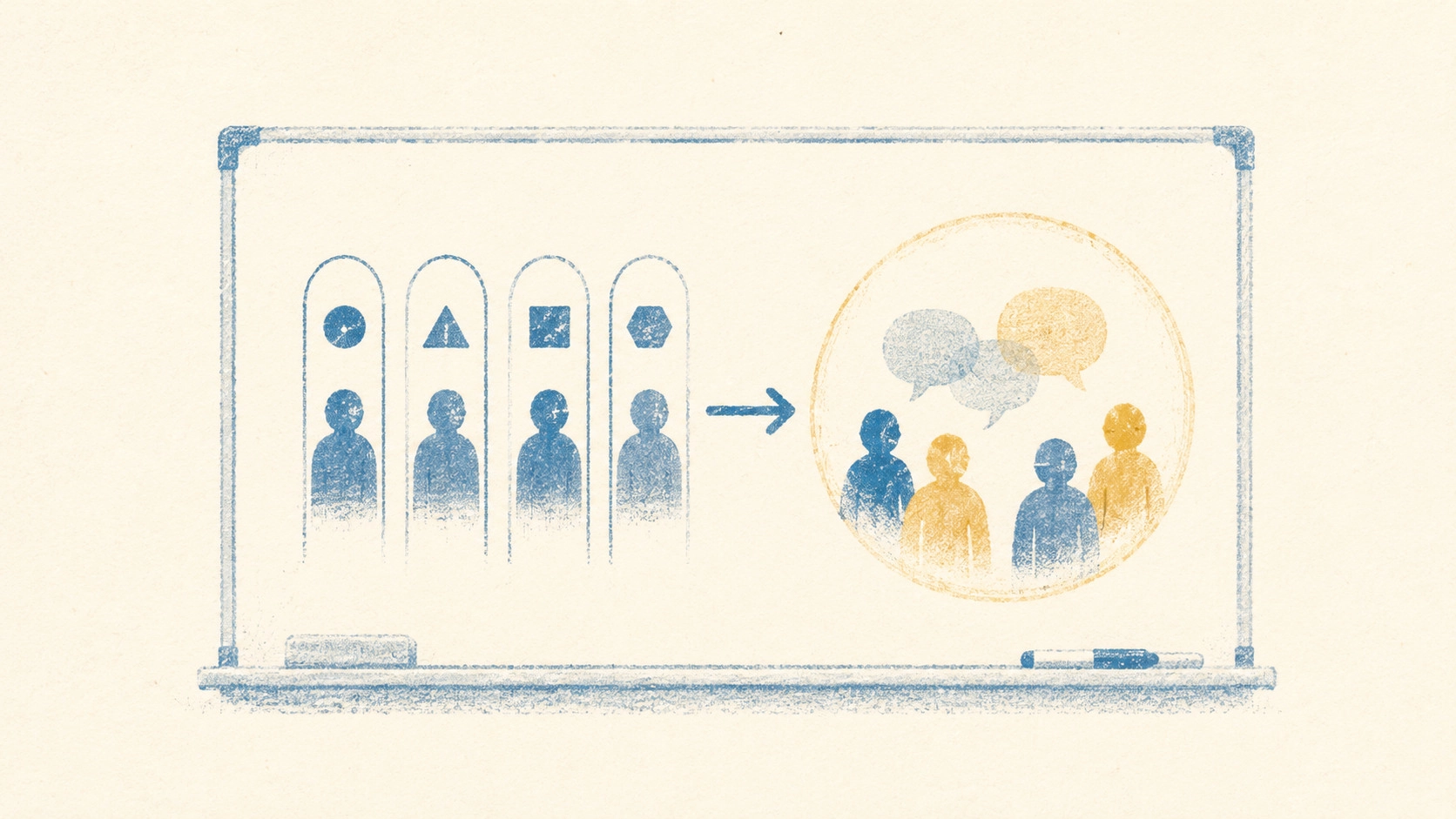
Map the work before reorganising people
Select a recent change and record who clarified it, approved it, implemented it, tested it and operated it. Separate necessary review from waiting caused by unclear ownership or unavailable capacity. Ask the people doing the work where they repeatedly lose time.
Do not assume every dependency is an organisational defect. Some reflect a real security requirement or specialist constraint. The goal is to make those dependencies reliable and remove the avoidable ones.
Match ownership to manageable scope
Team Topologies describes stream-aligned, enabling, platform and complicated-subsystem teams, with different interaction modes. Use the concepts to discuss work and cognitive load rather than copying an org chart.
One product team might own a checkout journey while using a platform’s deployment service and obtaining specialist payment review. It can own the outcome without building every dependency itself. Our guide to software product-engineer responsibilities applies the same distinction at role level.
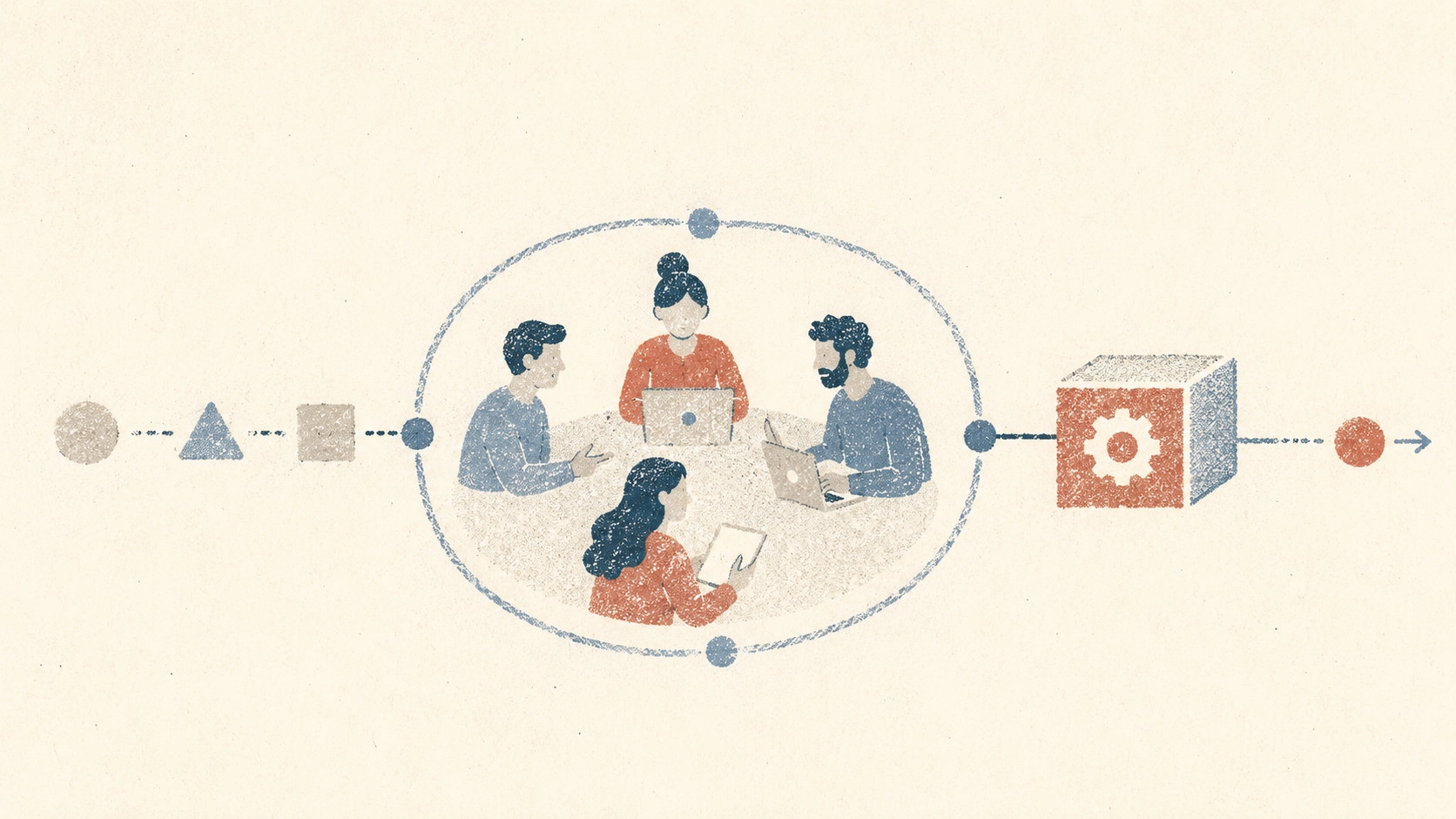
Write a small team charter
| Question | What to record |
|---|---|
| What do we own? | A bounded product area or service and its users |
| What can we decide? | Independent decisions and required approvals |
| What do we depend on? | Named providers, interfaces and escalation paths |
| How do we operate it? | Release, incident and maintenance responsibilities |
| How will we assess progress? | User outcomes, delivery flow and reliability |
Review the charter with neighbouring teams. A document that promises autonomy while another team controls every release will not resolve the underlying constraint.
Change architecture only where evidence supports it
A monolith does not automatically prevent clear ownership, and microservices do not automatically remove coordination. Module boundaries, shared data and deployment practices matter. Make a bounded change and inspect whether it improves delivery before committing to a broad reorganisation or rewrite.
Use our legacy modernization guide when the technical structure is part of the bottleneck. For capacity gaps, compare ways to bring developers into the team without confusing a contract model with an organisational design.
Measure the change without ranking people by output
Track waiting time, rework, release reliability and the user outcome the team supports. DORA’s delivery measures can inform a team-level review. Do not use lines of code, AI output or ticket counts as a stand-alone productivity ranking.
AI-assisted work still needs engineering judgment, implementation skill and verification. Assign review responsibilities and approved tools explicitly. A change in tooling does not make domain knowledge or specialist skill unnecessary.
Frequently asked questions
Should every team be cross-functional?
Not necessarily. Product teams and specialist or platform groups may need different structures. Choose from the work and dependencies.
Do we need microservices to make teams autonomous?
No. Start with clear responsibilities, interfaces and release practices. Split services only when the benefits justify the operating cost.
What should we change first?
Choose one repeated bottleneck, define an owner and test a small intervention. Avoid a company-wide reorganisation without evidence.
Discuss a delivery bottleneck
Powercode Group provides dedicated teams and engineering capacity. If your main constraint is unclear internal ownership, hiring alone will not fix it. Share a concrete example of work that keeps getting stuck to discuss the next step.