DevOps Outsourcing Companies: Four Options Compared
Compare DevOps outsourcing companies by the work and operating responsibility you want to hand over. Scalo publishes environment management and monitoring services; Itelence describes delivery pipelines and infrastructure automation; N-iX offers DevOps strategy and implementation. Powercode Group fits a staffing requirement when your team can direct an engineer’s work. Put planned changes and production support into separate parts of the brief.
Powercode Group publishes this comparison. The service descriptions below come from each supplier’s own pages checked on 2 November 2026; the buying questions are our editorial analysis.
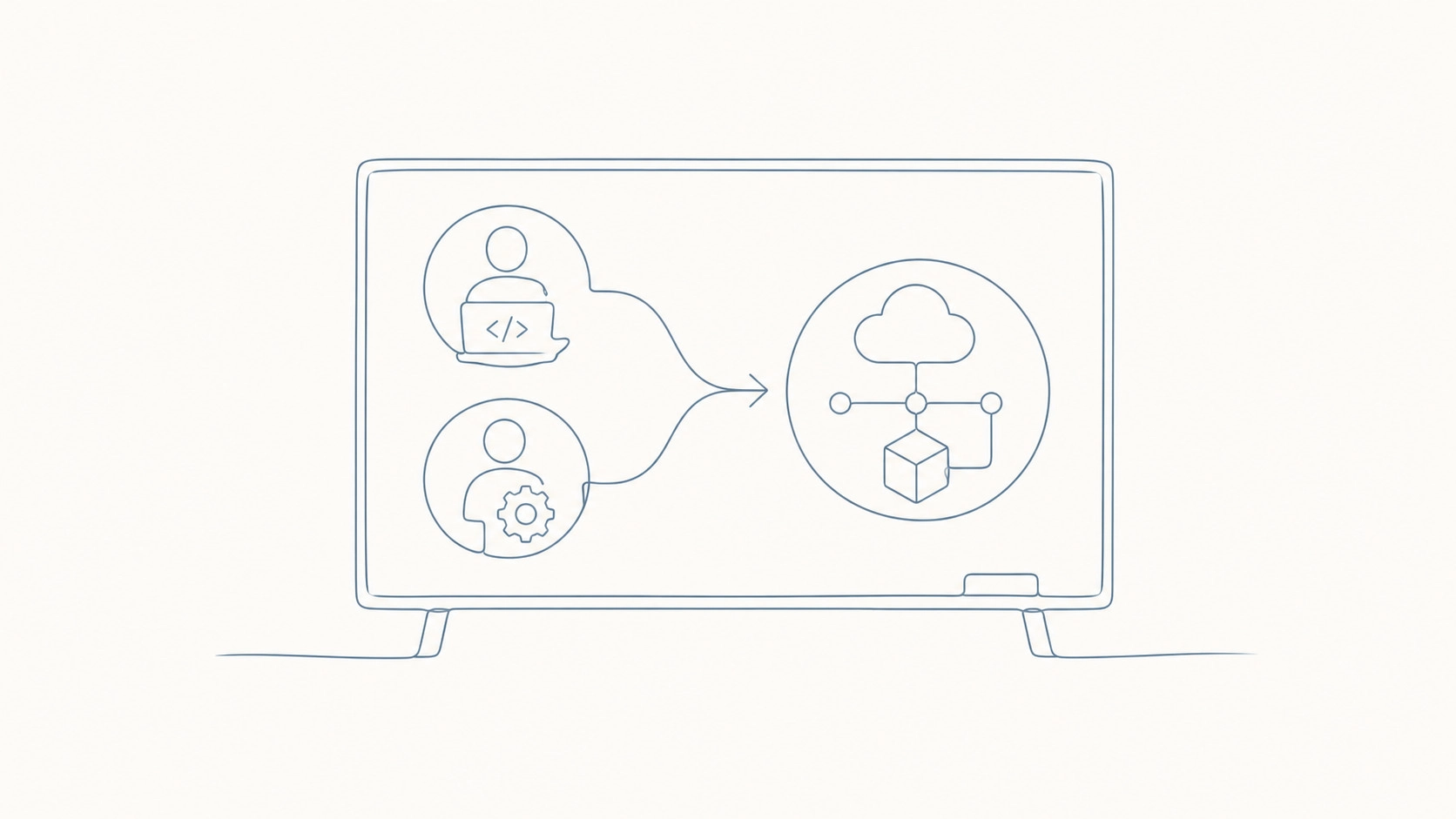
Start with the operating model
A company can need an engineer to improve deployment without wanting to outsource production operations. Another may need a supplier to own a defined service. These are different purchases. Write down who prioritises work, approves access, accepts changes and responds when the agreed engineering allocation has ended.
| Company | Published service focus | Confirm in the proposal |
|---|---|---|
| Scalo | Environment management, delivery pipelines and monitoring | Responsibility after implementation |
| Itelence | Infrastructure automation and release engineering | Embedded capacity versus managed scope |
| N-iX | DevOps strategy, infrastructure as code and implementation | Deliverables from roadmap to handover |
| Powercode Group | Cloud and DevOps engineers for a buyer-led team | Your technical owner and engineer allocation |
Scalo: environments, pipelines and monitoring
Scalo’s DevOps outsourcing page describes environment management, pipeline implementation and maintenance, and proactive monitoring. It also describes infrastructure as code and work across cloud, on-premises and hybrid environments.
This is worth examining when the brief includes keeping environments usable after the initial automation work. Ask which environments the supplier will manage, who owns monitoring alerts and how changes are approved. Have the proposal distinguish implementation deliverables from continuing responsibilities, including the conditions for ending or transferring the service.
Itelence: delivery engineering with different engagement options
Itelence describes DevOps outsourcing around continuous integration and delivery, infrastructure automation and release engineering. Its page names Terraform, Kubernetes, GitHub Actions and Jenkins, alongside project, ongoing and staff augmentation options.
Ask which model the quote actually covers. An embedded engineer reporting to your lead has a different boundary from a supplier operating an agreed service. For a small product team, request a clear first work package, the required internal review time and an explanation of how the supplier hands over changes.
N-iX: strategy through implementation
N-iX’s own DevOps consulting page lists strategy design, infrastructure as code, delivery automation, container orchestration, logging, monitoring and security integration. Its infrastructure tooling examples include Terraform, Ansible and CloudFormation.
Consider this scope when the decision extends beyond filling one role and includes a roadmap or changes across several parts of the delivery process. Ask what assessment produces, which implementation work is included and who owns the resulting repositories, access configuration and runbooks. Keep optional work visible so that a broad capability list does not become an undefined commitment.
Powercode Group: engineers within your team
Powercode Group’s Cloud & DevOps Engineers service is a relevant route when you need engineering capacity inside a process your team directs. The staff augmentation model lets the buyer define the role and working responsibilities.
Bring the cloud stack, first infrastructure change, available engineering hours and a named technical owner. Agree the permissions, review path, documentation and handover before work starts. Any incident response, out-of-hours availability or managed operating responsibility needs its own explicit scope; an engineer allocation alone does not define that coverage.

Ask each company to explain one change
Use a small, hypothetical task to make proposals comparable: move an application deployment from a manual procedure into a reviewed pipeline. Ask what the supplier would inspect first, what access it needs and how it would demonstrate success. Let the company explain its approach without asking for unpaid production work.
Your comparison sheet should capture the repository owner, approval path, test environment, rollback method and documentation. Add the person who reviews the completed change. Resolve any missing owner before negotiating an hourly or monthly figure.
“Scorpion Power supplied four Full-Stack Engineers into CENDAS’s existing teams, while CENDAS kept product and technical direction. Use that boundary when buying DevOps capacity: name who approves infrastructure changes and define incident coverage separately.”
Jean-Michel Haase, Country Manager for the DACH region at Scorpion Power
Keep hiring and support decisions distinct
Once you know the operating model, our DevOps engineer hiring guide helps translate it into role and assessment criteria. Our guide to full-time versus part-time DevOps capacity addresses how much planned engineering work your team can use.
For a staffing conversation with Powercode Group, share the task, stack and internal review owner. If your requirement is a managed production service, ask suppliers to specify its operating boundaries and support terms before comparing it with an engineer’s allocation.