How to Hire a Data Engineer in 2026: Skills and Models
Hiring a data engineer starts with the business outcome, not a list of cloud tools. Define the data products, reliability targets, security constraints, and ownership model first. Then assess whether you need one in-house engineer, temporary capacity, or a delivery partner that can cover architecture, pipelines, quality, and operations.
This buyer’s guide explains what a data engineer should own, which skills to test, how the main hiring models differ, and how to run an evaluation that reveals practical judgment. Companies hiring data engineers can use the scorecard and interview questions below to avoid selecting on keywords alone.
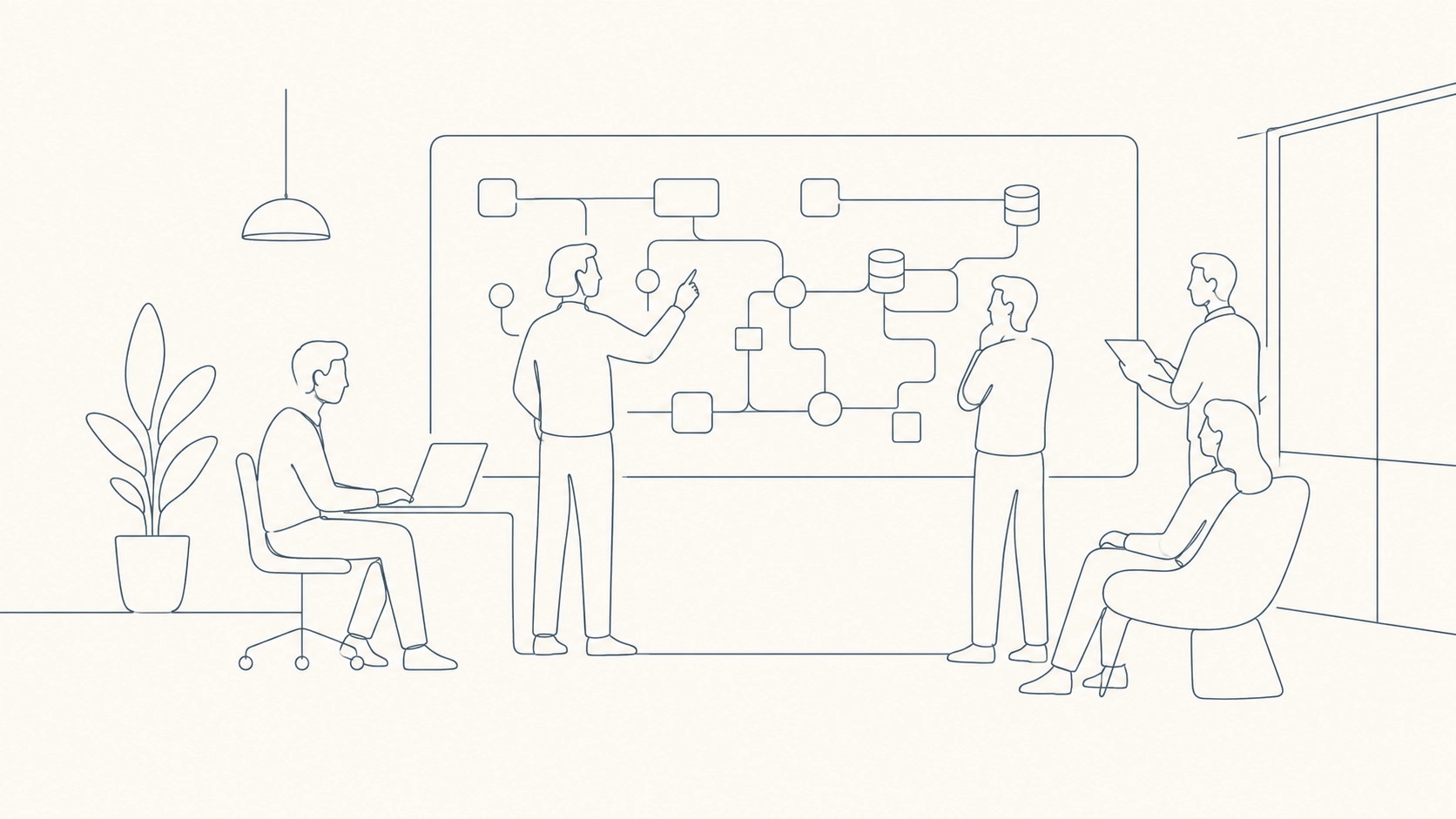
Start by confirming that you need a data engineer
A data engineer builds and operates the systems that collect, transform, store, govern, and deliver data. The role is different from an analyst who interprets data, an analytics engineer who prepares modeled datasets for analysis, and an ML engineer who deploys machine-learning workloads.
| Your main need | Role to prioritize | Typical output |
|---|---|---|
| Reliable ingestion from applications, APIs, and databases | Data engineer | Tested batch or streaming pipelines |
| Consistent business definitions and reporting models | Analytics engineer | Documented transformation layer and metrics |
| Dashboards, analysis, and decision support | Data analyst or BI specialist | Reports, models, and business insights |
| Training, deployment, and monitoring of ML models | ML engineer | Production ML system and model pipeline |
| Cloud infrastructure, deployment, and platform reliability | DevOps, SRE, or platform engineer | Secure, observable infrastructure |
Small teams may combine two roles, but the owner and expected outcomes must remain clear. If your immediate problem is model production rather than data infrastructure, our guide to hiring an ML engineer is a better starting point. For infrastructure ownership, see how to hire a DevOps engineer.
Define the outcomes before starting data engineer recruitment
A vague request for “a modern data platform” produces vague proposals and poor interviews. Write a one-page outcome brief before you start data engineer hiring.
- Business users: Who needs the data and which decisions depend on it?
- Sources and destinations: Which applications, databases, files, APIs, warehouses, and BI tools are in scope?
- Service levels: How fresh, complete, and available must the data be?
- Scale: What are the current and expected data volumes, event rates, and query patterns?
- Quality: Which errors would create financial, operational, or regulatory risk?
- Security: Which personal, financial, health, or confidential data needs stricter controls?
- Ownership: Who will operate the platform after delivery?
- Constraints: Which cloud, budget, compliance, timeline, and legacy-system limits are fixed?
Turn these points into measurable outcomes. “Build a pipeline” is an activity. “Deliver validated sales data to the finance model by 07:00 each day, with an alert within five minutes of a failed load” is an outcome you can design and test.
What a strong data engineer should be able to do
Official role frameworks from AWS, Google Cloud, and Microsoft converge on a broad responsibility set: ingest and transform data, choose and operate data stores, orchestrate pipelines, monitor performance and quality, and apply security and governance.
Data architecture and trade-offs
The engineer should explain why a design fits your workload. Look for clear reasoning about batch versus streaming, warehouse versus lakehouse, managed services versus custom components, and central versus domain ownership. A list of products is not an architecture.
Pipeline engineering and orchestration
Assess ingestion, transformation, dependency management, retries, idempotency, backfills, schema changes, and failure recovery. A reliable pipeline must produce the correct result when jobs restart, sources arrive late, or events appear twice.
Storage and data modeling
The candidate or partner should choose storage and models based on access patterns, latency, cost, retention, and governance. Test whether they can design for both current use and likely change without creating an elaborate platform before it is needed.
Data quality and observability
Good data engineering makes failures visible. Expect automated checks for freshness, completeness, uniqueness, referential integrity, accepted values, and volume anomalies. The team should define owners and response procedures for failed checks instead of relying on dashboards that nobody monitors.
Security and governance
Look for practical experience with access control, encryption, secrets, audit logs, retention, lineage, data classification, and deletion. Ask how the engineer prevents sensitive production data from leaking into development and test environments.
Operations and cost control
A data platform is a production system. The engineer should understand deployment, infrastructure as code, monitoring, incident response, performance tuning, and cost attribution. They should be able to show where spend comes from and how an optimization affects reliability.

Choose the right data engineer hiring model
The best model depends on urgency, duration, internal leadership, and whether the work is a continuing capability or a defined transformation. Compare the models against your actual constraints instead of assuming that one is always cheaper or safer.
| Model | Best fit | Main advantage | Main risk |
|---|---|---|---|
| In-house hire | Permanent platform ownership and steady roadmap | Deep company context and long-term continuity | Slow recruitment or a role too broad for one person |
| Independent contractor | Defined task with strong internal technical leadership | Flexible access to a specialist | Single-person dependency and limited coverage |
| Staff augmentation | A capable team needs extra capacity or a missing skill | Fast integration into your delivery process | You retain prioritization, architecture, and management |
| Dedicated team | Longer roadmap needs several complementary roles | Stable capacity with broader skill coverage | Requires clear product ownership and governance |
| Outcome-based partner | Defined platform or migration outcome | Partner owns delivery method and agreed results | Poorly defined acceptance criteria create disputes |
If you already have strong data architecture and management, staff augmentation may solve the capacity gap. If you need a stable cross-functional unit, compare the trade-offs in our guide to hiring dedicated developers. A data engineer company should be able to tell you when a simpler individual hire is the better option.
Build a practical evaluation process
Certifications can confirm exposure to a platform, but they do not prove delivery judgment. Use the same evidence-based process for an individual candidate and a data engineering recruitment partner.
- Screen against the outcome brief. Confirm relevant scale, sources, security needs, ownership, and delivery model.
- Run a project deep dive. Ask the person to explain one system they designed, the constraints, an important trade-off, a failure, and what changed afterward.
- Use a realistic architecture exercise. Provide a small version of your problem and ask for assumptions, options, risks, and an incremental plan.
- Review operational evidence. Examine tests, monitoring, documentation, deployment, lineage, and incident practices.
- Validate collaboration. Test how they explain uncertainty and trade-offs to analysts, product owners, security teams, and executives.
- Check references around outcomes. Ask what the engineer owned, how the system behaved in production, and how handover worked.
A reusable data engineer scorecard
| Area | Suggested weight | Evidence to request |
|---|---|---|
| Architecture and trade-offs | 20% | Design rationale linked to requirements and constraints |
| Pipeline reliability | 20% | Testing, retries, idempotency, backfill, schema handling |
| Data modeling and storage | 15% | Models designed for real access and lifecycle needs |
| Quality and observability | 15% | Checks, service levels, alerts, ownership, incident examples |
| Security and governance | 15% | Access, classification, lineage, audit, retention controls |
| Delivery and communication | 15% | Clear decisions, documentation, estimates, and handover |
Change the weights to match the assignment. A migration lead needs stronger architecture and delivery evidence. A pipeline operations role needs more emphasis on reliability, observability, and incident response.
Ten interview questions that reveal practical judgment
- Which business decisions will depend on this platform, and how would that change your design?
- How would you define and monitor freshness, completeness, and correctness for our most important dataset?
- How do you handle late, duplicated, missing, or out-of-order data?
- How would you plan a backfill without disrupting current production workloads?
- What would make you choose batch processing over streaming for this use case?
- How do you deploy a schema change when producers and consumers cannot update at the same time?
- Which parts of the platform should be managed services, and which justify custom code?
- How would you prevent one customer or team from accessing another’s data?
- What would you monitor on the first day after launch?
- How would another team operate this platform if you were unavailable?
Strong answers begin with clarifying questions. They expose assumptions, compare options, and describe failure handling. Be cautious when someone proposes a fashionable architecture before understanding users, scale, latency, governance, and budget.
Red flags during data engineer hiring
- The solution is a list of tools with no link to requirements.
- The engineer treats data quality as an analyst’s problem.
- Production changes depend on manual steps known by one person.
- Security is reduced to encryption without access, audit, and lifecycle controls.
- The design assumes every workload needs real-time processing.
- There is no plan for schema evolution, backfills, recovery, or ownership.
- Cost estimates omit storage growth, data transfer, orchestration, monitoring, and support.
- The partner cannot explain how documentation and intellectual property will be handed over.

Plan the first 90 days
A good hire still needs access, context, and priorities. Use the first 90 days to reduce uncertainty and deliver one visible improvement.
Days 1–30: map and measure
Document sources, consumers, critical pipelines, owners, data classifications, current incidents, costs, and known quality problems. Establish baseline service levels and identify one high-value, contained improvement.
Days 31–60: improve one production path
Deliver a focused change such as pipeline observability, automated quality checks, a reliable backfill process, or removal of one manual transfer. Include tests, documentation, deployment, and ownership.
Days 61–90: agree on the roadmap
Use the evidence from the first improvement to prioritize architecture, governance, reliability, and cost work. Define measurable outcomes, dependencies, and decision owners for the next quarter.
What determines the cost of hiring a data engineer?
The cost depends on seniority, location, engagement model, cloud and platform specialization, security requirements, expected ownership, and the amount of legacy complexity. The cheapest hourly rate may produce the highest total cost if the work needs rework, constant supervision, or emergency support.
Compare total engagement cost: recruitment, onboarding, management, tooling, cloud resources, knowledge transfer, coverage, and replacement risk. Our broader guide to the cost of hiring a developer explains how region and engagement model affect planning. Treat any early estimate as a range until the team has reviewed the sources, workloads, security constraints, and target architecture.
When Powercode Group is and is not the right fit
Powercode Group is a good fit when you need an experienced data engineer, a complementary delivery team, or ownership of a defined data platform outcome. We can support ingestion, transformation, cloud data architecture, quality, observability, governance, and the engineering work needed to connect data with analytics or AI.
We are not the right choice if you only need to advertise permanent roles without technical delivery support or buy a short training course. For delivery capacity, explore our AI and ML engineering talent. For broader platform and product delivery, see our AI and data science services.
Frequently asked questions
How do I know whether I need a data engineer or an ML engineer?
Hire a data engineer when the main problem is collecting, transforming, storing, governing, or serving reliable data. Hire an ML engineer when the main problem is training, deploying, and monitoring machine-learning models. Many production AI projects need both roles.
Should I hire an in-house data engineer or a data engineering company?
Choose an in-house hire for permanent ownership and a steady internal roadmap. Choose a partner when you need faster access to several skills, delivery ownership, or temporary support for a platform, migration, or recovery effort. A hybrid model often works when an internal owner needs external delivery capacity.
What should I test when hiring a data engineer?
Test architecture decisions, pipeline reliability, data modeling, quality, observability, security, cost awareness, and communication. Use a realistic scenario and a project deep dive instead of a trivia-heavy interview.
Which technical skills matter most for a data engineer?
The stack depends on your environment, but the core capabilities remain stable: SQL, programming, ingestion, transformation, orchestration, storage, modeling, testing, monitoring, security, governance, and cloud operations. Evaluate how the engineer applies those skills to constraints and failures.
How long should the data engineer recruitment process take?
There is no reliable universal timeline. It depends on role clarity, seniority, location, compensation, interview stages, and the engagement model. Reduce delays by agreeing on the outcome brief, scorecard, decision owners, and interview schedule before sourcing begins.