AI for Fintech: A Practical Guide to a Controlled First Use Case
AI for fintech is most useful when it solves a defined problem with a measurable outcome and appropriate controls. For a first implementation, consider bounded internal work such as document extraction or analyst assistance before allowing a system to influence consequential financial decisions.
This is an engineering guide, not legal, investment or regulatory advice. Requirements depend on the jurisdiction, institution, data and use case. Qualified specialists should review any production financial service.

Select a task with a verifiable result
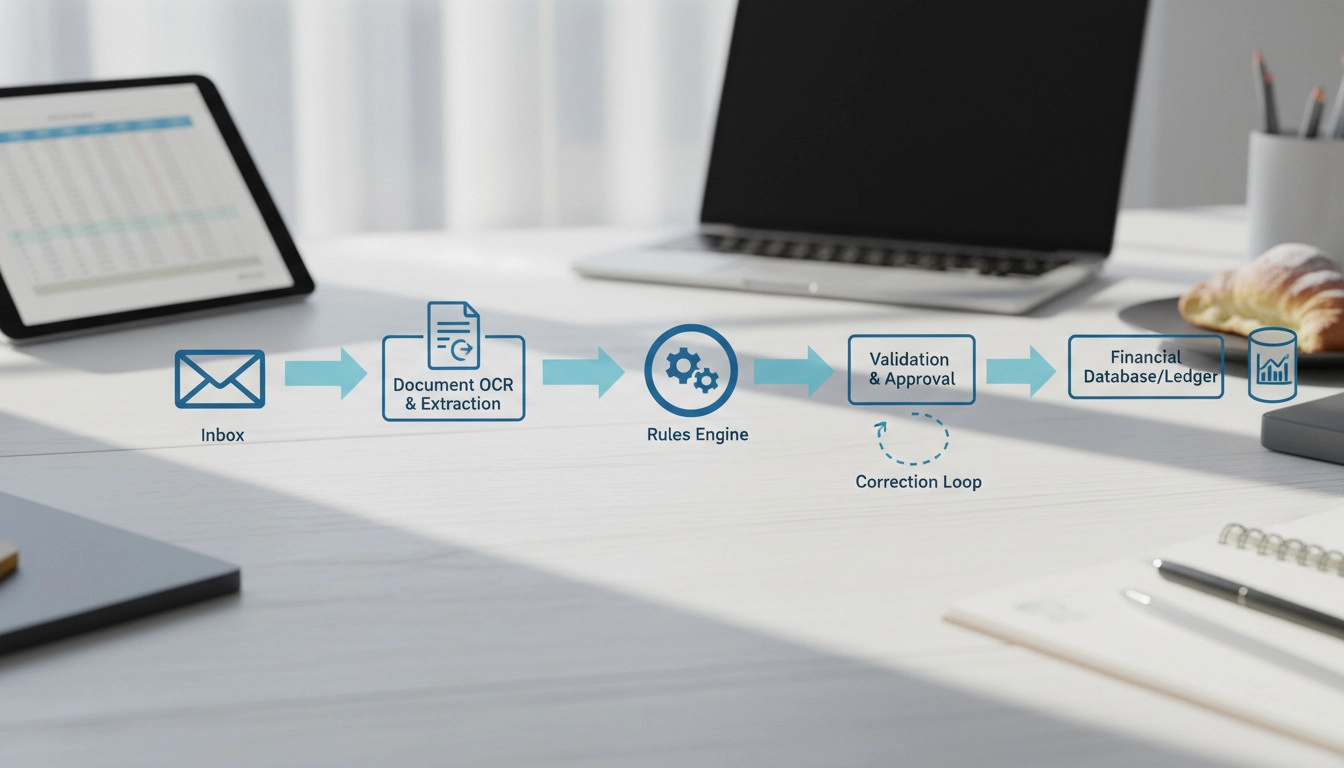
Choose a workflow where a person can check the result against source evidence. An invoice assistant might extract a supplier, amount and currency into a draft for review. It should not post an uncertain amount directly into a ledger simply because its output is valid JSON.
| Starting use case | Required evidence | Control boundary |
|---|---|---|
| Document extraction | Source field, extracted value and validation result | Review exceptions before records are posted |
| Internal policy assistance | Current authorised policy passage | Escalate when evidence is missing or conflicting |
| Analyst summary | Traceable supporting records | Analyst remains accountable for the decision |
Keep data quality and permissions explicit
Document where data originates, who may use it, how long it is retained and which systems receive it. Separate environments and use sanitised data for development. A managed service, local deployment or security certification does not by itself establish compliance for the whole product.
Where GDPR applies, consider the applicable processing obligations and the specific restrictions around certain solely automated decisions. These are not identical to a general requirement that every AI output explain itself. Consult the European Commission guidance on individual rights and obtain use-case-specific advice.

Choose the simplest architecture that works
Use ordinary rules and validation where they meet the requirement. A language model can help interpret varied documents, but it does not replace arithmetic checks, reconciliation or authoritative records. A vector database is not mandatory for every fintech application.
For knowledge-based assistance, evaluate retrieval and fine-tuning as different options. The deployment must also provide authentication, permissions, versioning and reliable failure handling. Our integration architecture guide compares operating choices.
Test failures before increasing autonomy
Include missing pages, poor scans, conflicting totals, incorrect currencies and unavailable external services in your test set. Check source fidelity, downstream state and correction effort. Model confidence alone should not decide whether a financial record is safe to use.
The NIST AI Risk Management Framework is a useful risk-management reference. Apply concrete agent permission and approval controls where the system can act.
Keep fraud controls layered
Rules-based fraud controls are not obsolete. Rules, statistical models, human investigation and other controls can complement one another. Select methods from the threat, available data and operational requirements; do not add biometric collection without establishing its necessity and obligations.
Evaluate value before scaling
Measure accepted work, correction time, false alerts, latency and total operating cost. Compare similar workloads before and after the change. Lower handling time is not a useful gain if errors or investigation queues increase.
Powercode Group supports fintech software delivery. If the task is already handled well by an existing tool, integration may be enough. Otherwise, share one workflow and its data constraints to discuss a controlled first implementation.
Frequently asked questions
Should a first fintech AI product give personalised financial advice?
Do not assume that an assistant can provide regulated advice merely because it can generate an answer. Establish the legal, professional and product requirements first.
Does a managed AI platform make our application compliant?
No. Supplier controls are one part of the system. Your use case, configuration, data handling and operating process still matter.
Can AI post extracted figures straight into accounting records?
Only within a validated process with appropriate authority and controls. For an initial implementation, use reviewable drafts and route uncertain cases to a person.