AI Agent Pricing in 2026: What Does an AI Agent Cost?
AI agent pricing is easy to underestimate because the model API is usually the smallest visible number in the system. A production agent also retrieves context, calls tools, retries failed steps, runs code, stores state, logs decisions and sometimes waits for a person to approve an action.
Short answer: AI agent pricing includes implementation, platform access, model and tool usage, and ongoing operation. There is no universal monthly figure. Compare the cost of a successfully completed task, including review and failed attempts. The worked examples below are planning illustrations, not quotes or market averages.
This buyer’s guide explains the cost stack, gives a calculation you can reuse, compares commercial models and shows where teams usually lose control of the budget. The calculation and guidance were reviewed on 10 September 2026. Check the linked vendor pricing pages before estimating a specific model.
AI agent pricing at a glance
| Cost layer | How it is charged | What makes it grow |
|---|---|---|
| Model inference | Input, cached input, reasoning and output tokens | Long context, verbose output and repeated loops |
| Tools | Per search, call, document, transaction or third-party API request | Multi-step tasks and failed calls |
| Retrieval and memory | Embedding, storage, vector search and database operations | Large knowledge bases and frequent re-indexing |
| Execution | Compute time, containers, browsers or sandboxes | Code execution and long-running workflows |
| Operations | Monitoring, evaluations, incident response and support | Customer-facing or regulated use cases |
| Implementation | Engineering hours | Integrations, permissions, edge cases and compliance |
That is why two products using the same model can have radically different economics. A support assistant that answers from a curated help centre is not comparable to an agent that opens a CRM record, checks a contract, calculates a quote and sends the result for approval.
What does model usage actually cost?
Token prices are useful inputs, not a complete AI agent price. Model providers can charge separately for input, output, caching and tools. The applicable rates depend on the model, service and request. Use current OpenAI, Anthropic or Google pricing for your selected configuration.
For an illustrative calculation, assume $3 per million input tokens and $15 per million output tokens. These are hypothetical rates, not a vendor quote. A request with 40,000 input tokens and 5,000 output tokens costs $0.195: $0.12 input plus $0.075 output. Four identical requests cost $0.78 before caching, tools or other charges. Real loops can have different token counts.
One user task can trigger several model requests, retrieval steps and external actions. Measure the complete workflow instead of multiplying a single message price by the number of users. When task difficulty varies, LLM routing is one possible cost control; compare accepted outcomes and fallback costs before assuming it saves money.
The formula that matters: cost per completed task
Use this formula before choosing a platform or setting your customer price:
Cost per successfully completed task = total operating cost during the measurement period ÷ accepted completed tasks during that period.
Include model usage, tools, retrieval, execution, monitoring, support and human review for all attempts, including failures. If 1,000 attempts cost $400 in total and 700 complete correctly, the cost is about $0.57 per accepted task, not $0.40. Avoid counting retries twice. Add an explicit allocation for initial implementation when estimating fully loaded cost.
Track at least these six fields for every run:
- task type and customer or workspace;
- model, input tokens, cached tokens and output tokens;
- number and cost of tool calls;
- retries, loop count and stop reason;
- human-review time;
- final status: completed, corrected, escalated or failed.
This telemetry belongs in the first production version. Retrofitting it after customers discover an unlimited plan is expensive.
How much does it cost to build an AI agent?
The bands below are illustrative scoping ranges, not market averages or fixed quotes. They combine an assumed $25–$49 hourly rate with hypothetical effort for three scopes. Neither the rate nor the effort is a Powercode offer. A real estimate requires the workflow, integrations, security constraints and expected volume.
| Scope | Example effort | Illustrative budget at $25–$49/hr | What it includes |
|---|---|---|---|
| Focused proof of concept | 120–250 hours | $3,000–$12,250 | One workflow, one or two tools, limited data and manual evaluation |
| Production internal agent | 400–900 hours | $10,000–$44,100 | Authentication, permissions, retrieval, monitoring, evaluations and deployment |
| Customer-facing or regulated system | Custom scope | Estimate from required controls and scope | Multi-tenancy, auditability, SLAs, security review, fallbacks and ongoing operations |
A focused proof of concept tests whether the workflow creates value. It does not prove that the system is safe to expose to every customer. Production cost appears when the agent meets identity, permissions, bad data, timeouts and ambiguous instructions.
If the workflow is still uncertain, start with a narrow MVP or proof of concept. If the agent will become part of the product, make the architecture decision explicitly; our guide to direct APIs, managed platforms and orchestrators compares the trade-offs.
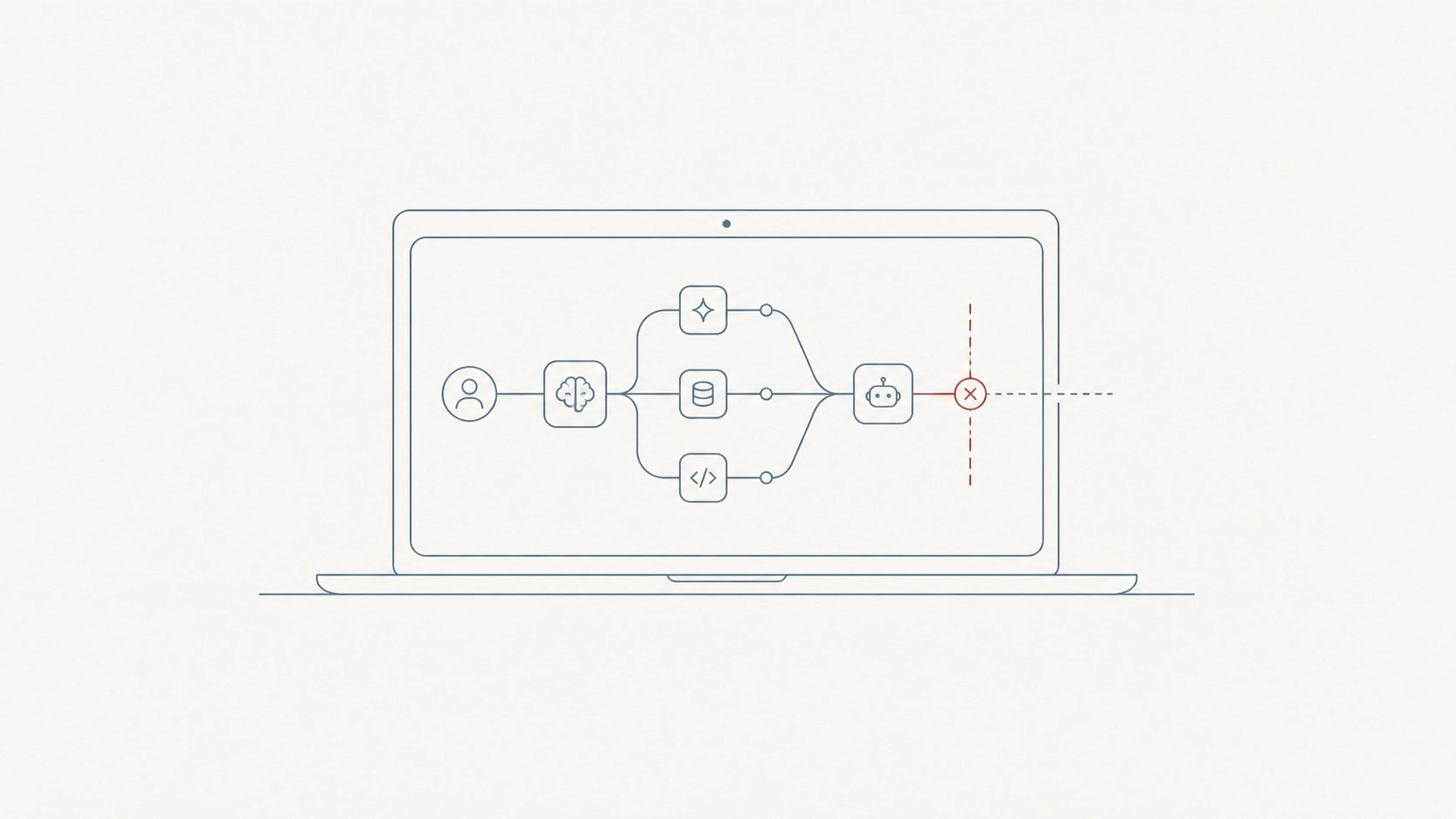
Four ways vendors price AI agents
Per seat
Predictable and familiar, but poorly aligned with automated work. It fits assistants whose usage is naturally limited by human users. It is risky when one user can launch thousands of autonomous tasks.
Per task or resolution
A useful model when a completed task is easy to define: a ticket resolved, document processed or lead qualified. It aligns price with value, but requires reliable outcome tracking and rules for partial completion.
Subscription plus usage
A base fee covers access, support and a usage allowance; overages cover variable work. This can make a defined workload predictable while charging separately for additional usage. The allowance must be based on measured task economics rather than a guess.
Outcome-based pricing
Payment is tied to a business result. It can work for narrow, measurable processes, but attribution becomes contentious when the agent is only one part of the outcome. Define the baseline, measurement window and exceptions before using it.
Where AI agent platforms hide cost
Long context. Sending an entire knowledge base with every turn is an architecture shortcut. Test whether retrieval, summarisation or caching reduce total cost without losing required context or quality.
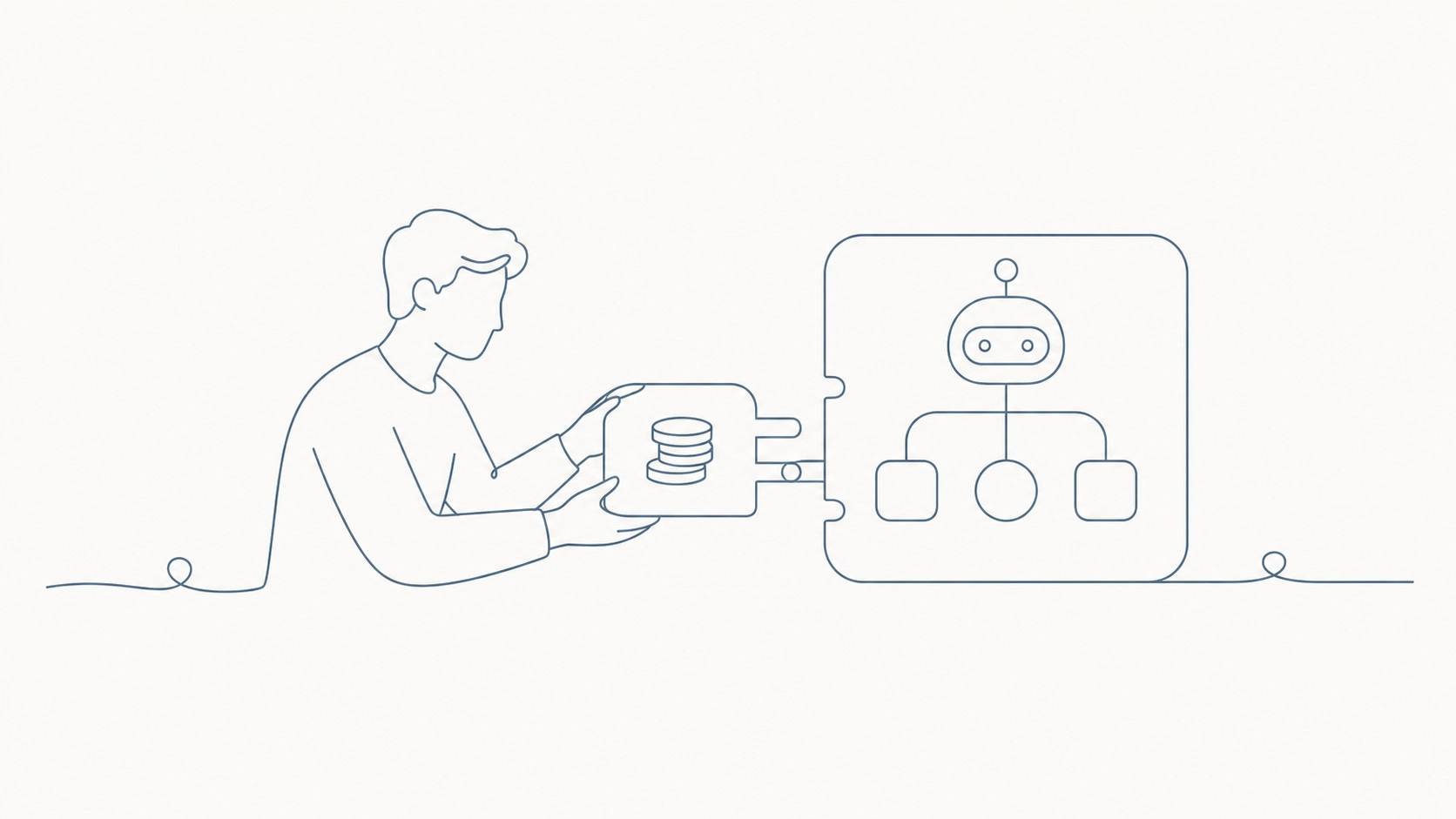
Unbounded loops. Every agent needs limits for steps, tokens, elapsed time and spend. When a limit is reached, the system should stop or ask for human input.
Tool definitions and results. Schemas, browser output and API responses return to the model as context. Tool use therefore creates both a direct charge and additional token usage.
Evaluation. A cheap agent that fails silently is expensive. Budget for test sets, regression checks and sampled human review. The same principle applies to AI code-review systems: the model is only one layer of the production workflow.
Permissions and audit logs. Agents that act need least-privilege credentials, approval gates and traceable decisions. These are engineering requirements, not optional enterprise polish. Our agent security checklist covers permission and approval boundaries. Our guide to adaptive AI architecture explains the monitoring and feedback loops needed for systems that change over time.
How to compare AI agent platform pricing
Ask every vendor for the same workload and the same boundaries. A useful request includes monthly completed tasks, average documents retrieved, tools called, latency target, retention, human-review rate and expected failure handling.
- Request a price for a defined workload, not a generic “agent”.
- Separate platform fees from model and third-party usage.
- Ask whether failed runs, retries and reasoning tokens are billed.
- Confirm export options for prompts, logs, evaluation data and embeddings.
- Model a normal month and a 3× spike.
- Calculate cost per successful task for both scenarios.
If the vendor cannot show usage at task level, the low headline price is not comparable. If you need a system built around your own workflow and data, Powercode’s AI and data science team covers discovery, data pipelines, model integration, deployment and monitoring.
Where we are the wrong choice
If a standard customer-support or productivity tool already covers the workflow, buy it. Custom engineering only makes sense when the process, data, integrations or economics are specific enough to create an advantage.
We fit when the agent must work inside an existing product or operational stack, the task can be measured, and the team needs control over data flows, tools and margins. For simple personal assistance, a subscription is faster and cheaper.
Frequently asked questions
How much does an AI agent cost per month?
There is no useful universal monthly figure. A light internal assistant may use only a few dollars of model capacity, while a tool-heavy agent can add search, storage, sandbox and support costs. Calculate completed tasks per month and multiply by the measured cost per successful task, then add the platform and maintenance fee.
How much does an AI assistant cost compared with an AI agent?
An assistant mainly returns information; an agent can plan and execute actions. The action layer adds tool calls, permissions, retries, audit logs and failure handling, so an agent usually costs more to build and operate even when both use the same model.
What is included in AI agent platform pricing?
Check whether the quoted price includes model tokens, tool calls, retrieval, storage, compute, observability, support and overages. Platforms package these differently, so compare a defined workload rather than list prices alone.
Should I price an agent per user or per task?
Per user works for human-paced assistants. Per task is usually safer when automation can run independently. A subscription with an included task allowance and transparent overages combines predictability with protection against extreme usage.
How do I stop an AI agent from creating unexpected costs?
Set maximum steps, tokens, time and spend per task. Route simple work to cheaper models, cache stable context, require approval for consequential actions and alert on changes in cost per successful task.
Is it cheaper to build or buy an AI agent?
Buy when the workflow is standard. Build when proprietary data, deep integrations, differentiated behaviour or unit economics matter enough to justify ownership. Start with a proof of concept before committing to a production architecture.
Sources
Use the official OpenAI API pricing, Anthropic API pricing and Google Gemini API pricing pages for model-specific rates. Numeric examples in this guide use explicitly stated assumptions rather than live vendor quotes.
Powercode Group builds production AI systems and the software around them. If you can describe the task, tools and expected volume, send us the workflow. We will tell you whether it needs custom engineering or whether an existing platform is the better purchase.